Physics Syllabus: Waves and Optics Concepts and Applications
Explore the fascinating topics of waves, optics, and acoustics in the B.Sc. Part II curriculum. Learn about harmonic oscillations, wave motion, ultrasonic waves, coupled oscillations, and acoustic principles like reverberation and intensity levels. Dive into the theoretical foundations and practical applications of these physical phenomena with detailed content and unit descriptions.

Download Presentation

Please find below an Image/Link to download the presentation.
The content on the website is provided AS IS for your information and personal use only. It may not be sold, licensed, or shared on other websites without obtaining consent from the author. If you encounter any issues during the download, it is possible that the publisher has removed the file from their server.
You are allowed to download the files provided on this website for personal or commercial use, subject to the condition that they are used lawfully. All files are the property of their respective owners.
The content on the website is provided AS IS for your information and personal use only. It may not be sold, licensed, or shared on other websites without obtaining consent from the author.
E N D
Presentation Transcript
B.Sc. Part II (Sem- III) Year: 2020-21 1 Waves and Optics- I (Paper: VI) Miss. Ankita S. Yadav Department of Physics P.D.V.P. College, Tasgaon
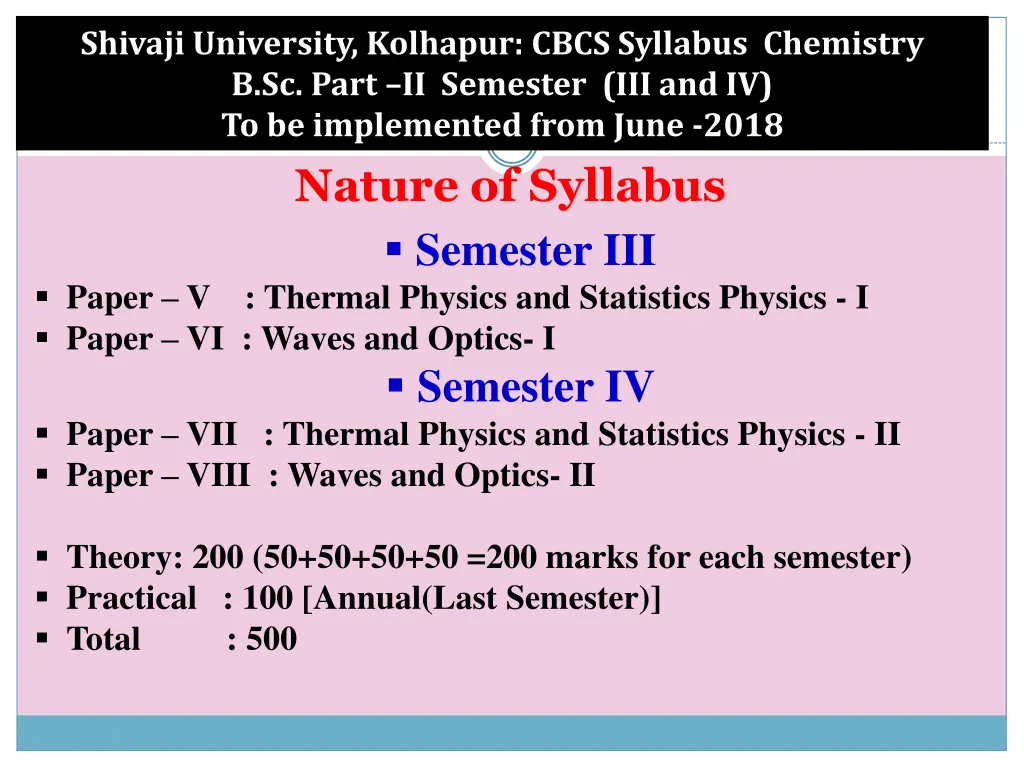
Shivaji University, Kolhapur: CBCS Syllabus Chemistry B.Sc. Part II Semester (III and IV) To be implemented from June -2018 Nature of Syllabus Semester III Paper V : Thermal Physics and Statistics Physics - I Paper VI : Waves and Optics- I Semester IV Paper VII : Thermal Physics and Statistics Physics - II Paper VIII : Waves and Optics- II Theory: 200 (50+50+50+50 =200 marks for each semester) Practical : 100 [Annual(Last Semester)] Total : 500 2
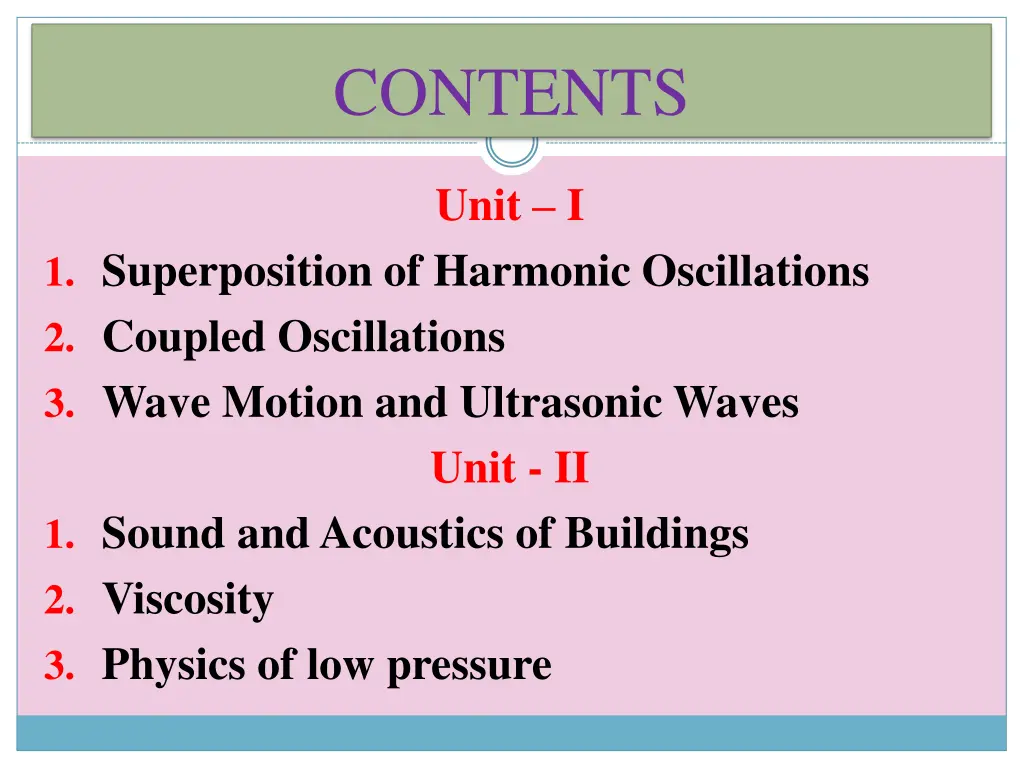
CONTENTS Unit I 1. Superposition of Harmonic Oscillations 2. Coupled Oscillations 3. Wave Motion and Ultrasonic Waves Unit - II 1. Sound and Acoustics of Buildings 2. Viscosity 3. Physics of low pressure
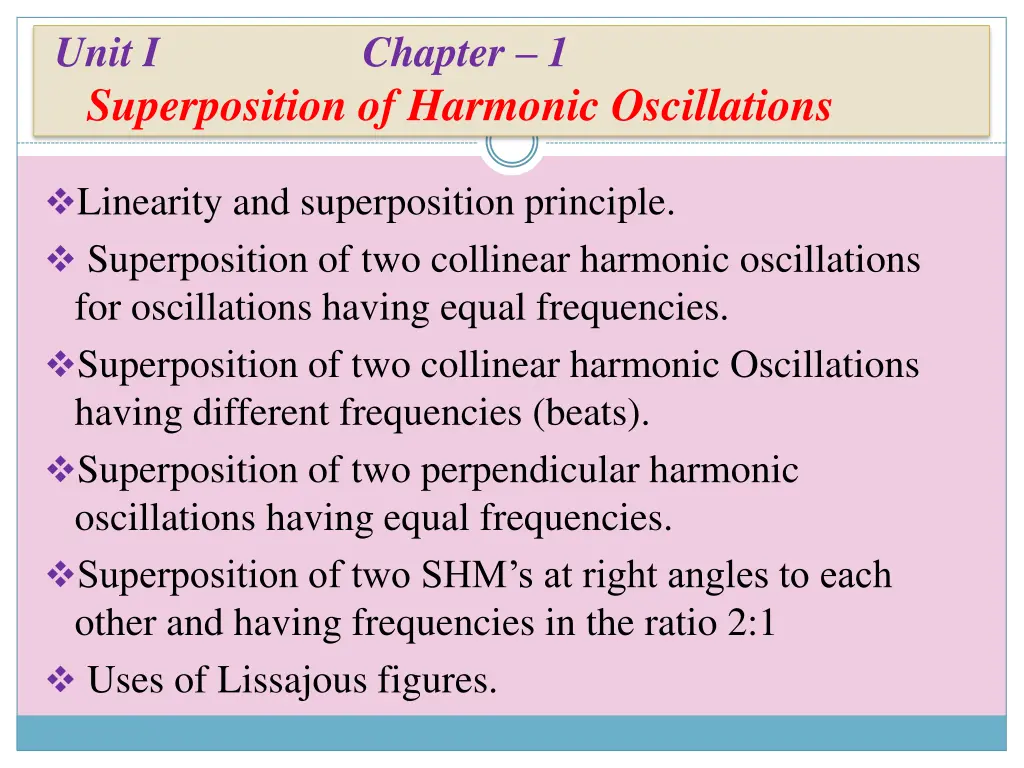
Unit I Chapter 1 Superposition of Harmonic Oscillations Linearity and superposition principle. Superposition of two collinear harmonic oscillations for oscillations having equal frequencies. Superposition of two collinear harmonic Oscillations having different frequencies (beats). Superposition of two perpendicular harmonic oscillations having equal frequencies. Superposition of two SHM s at right angles to each other and having frequencies in the ratio 2:1 Uses of Lissajous figures.
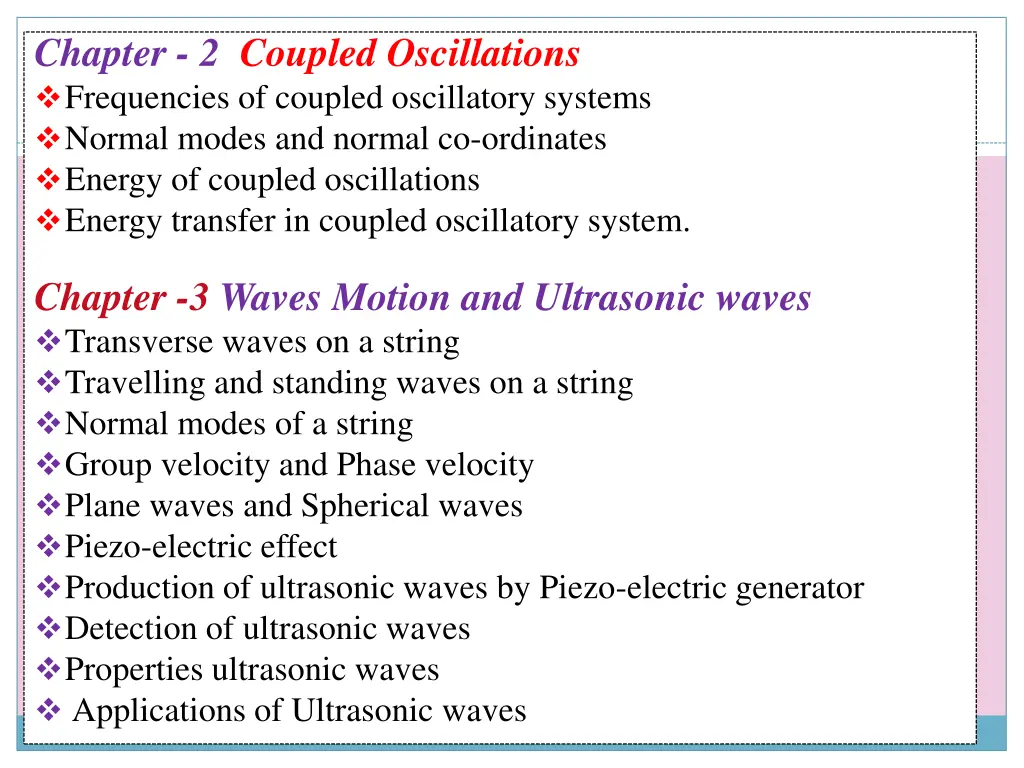
Chapter - 2 Coupled Oscillations Frequencies of coupled oscillatory systems Normal modes and normal co-ordinates Energy of coupled oscillations Energy transfer in coupled oscillatory system. Chapter -3 Waves Motion and Ultrasonic waves Transverse waves on a string Travelling and standing waves on a string Normal modes of a string Group velocity and Phase velocity Plane waves and Spherical waves Piezo-electric effect Production of ultrasonic waves by Piezo-electric generator Detection of ultrasonic waves Properties ultrasonic waves Applications of Ultrasonic waves
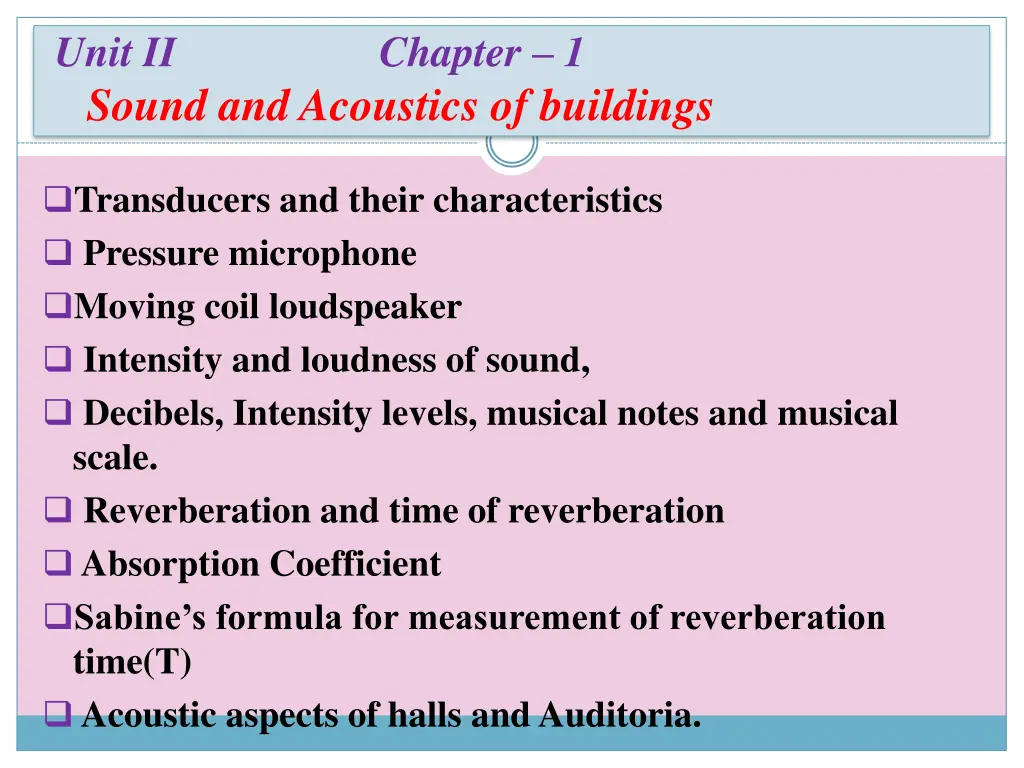
Unit II Chapter 1 Sound and Acoustics of buildings Transducers and their characteristics Pressure microphone Moving coil loudspeaker Intensity and loudness of sound, Decibels, Intensity levels, musical notes and musical scale. Reverberation and time of reverberation Absorption Coefficient Sabine s formula for measurement of reverberation time(T) Acoustic aspects of halls and Auditoria.
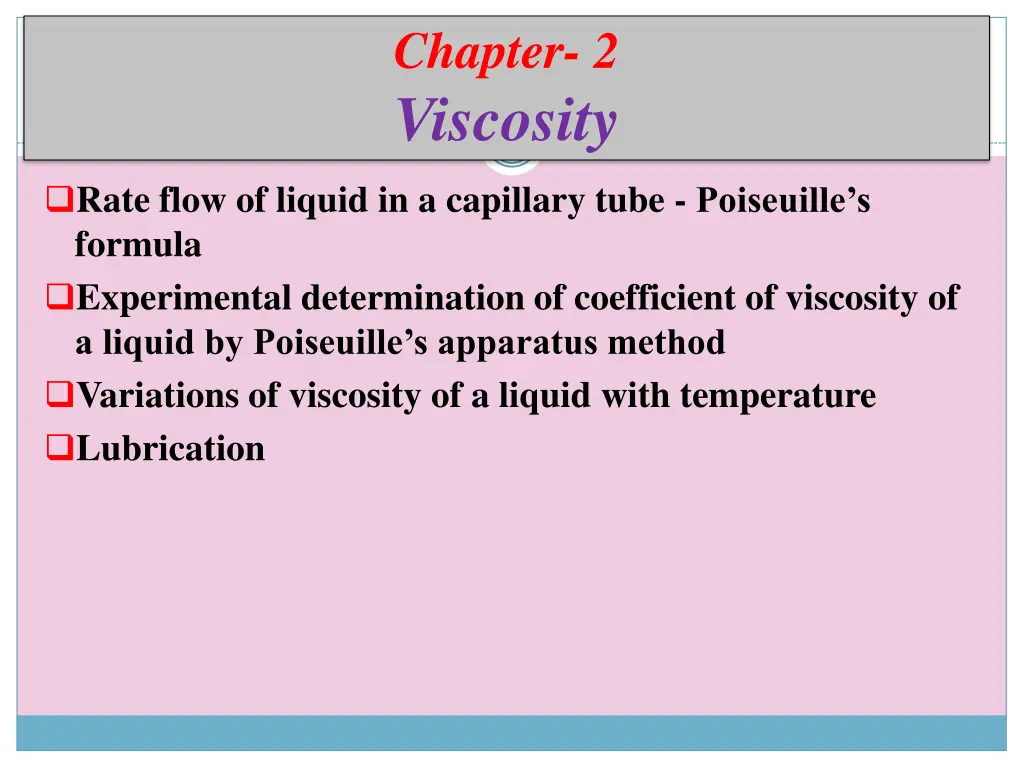
Chapter- 2 Viscosity Rate flow of liquid in a capillary tube - Poiseuille s formula Experimental determination of coefficient of viscosity of a liquid by Poiseuille s apparatus method Variations of viscosity of a liquid with temperature Lubrication
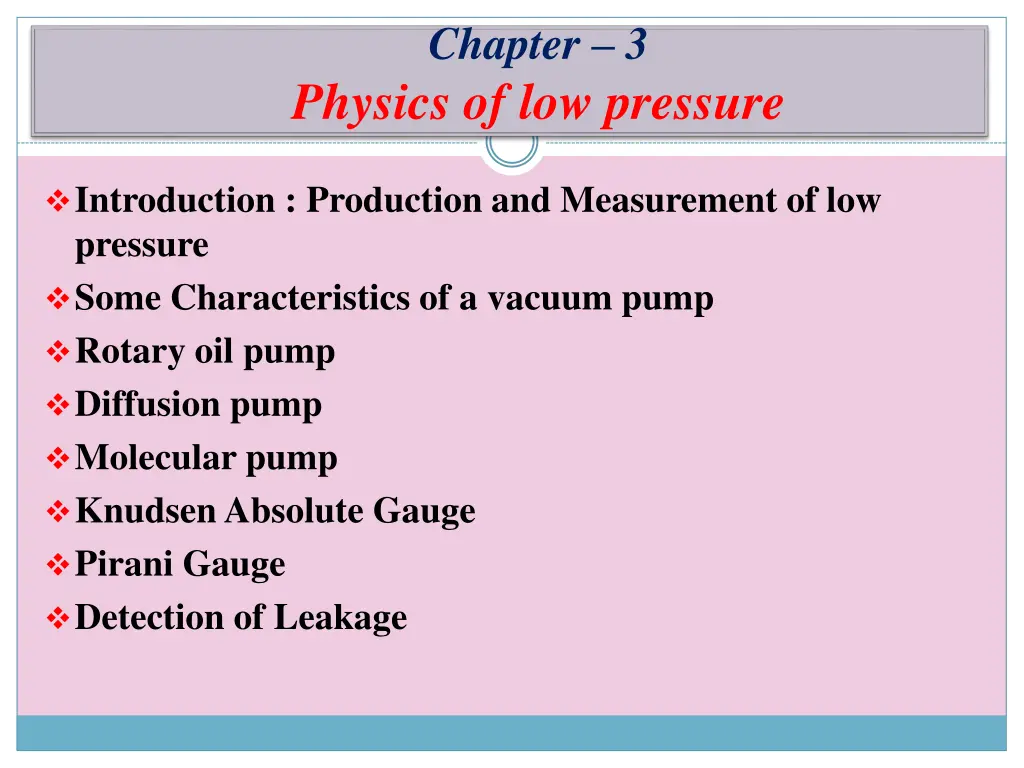
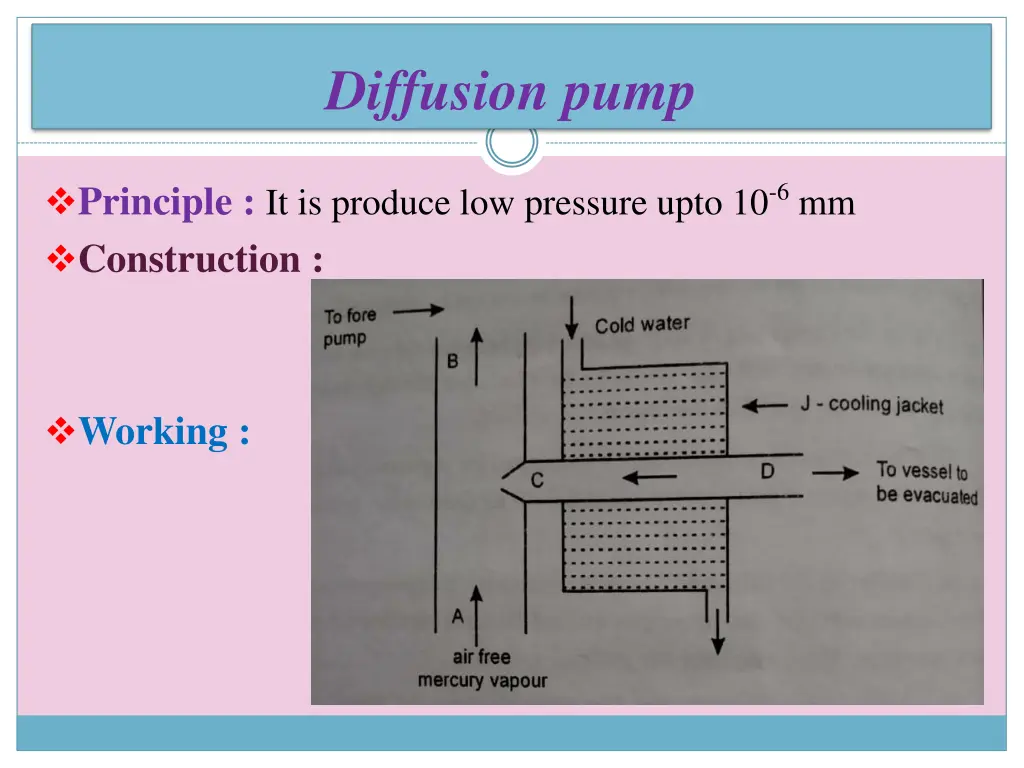
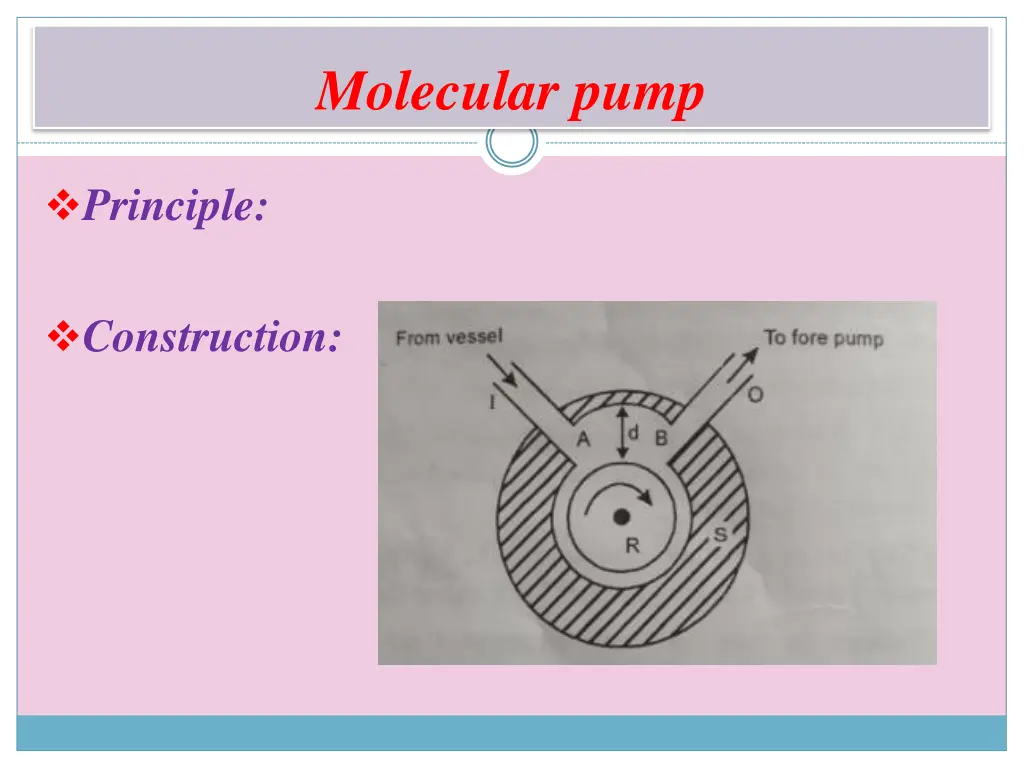
Chapter 3 Physics of low pressure Introduction : Production and Measurement of low pressure Some Characteristics of a vacuum pump Rotary oil pump Diffusion pump Molecular pump Knudsen Absolute Gauge Pirani Gauge Detection of Leakage
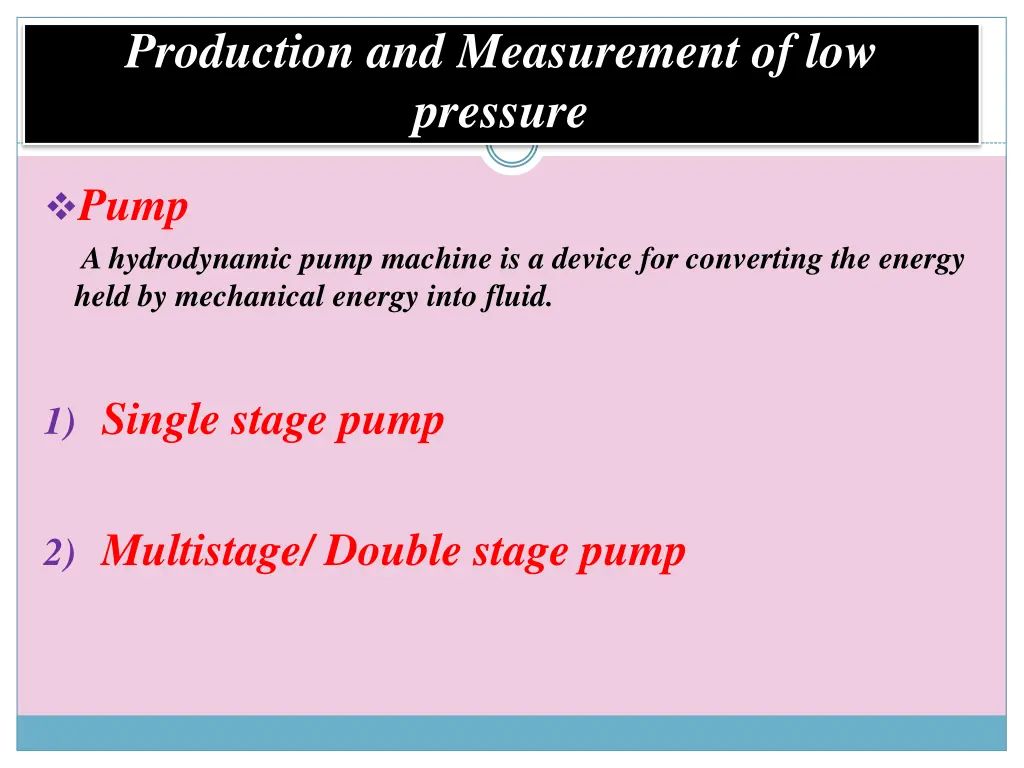
Production and Measurement of low pressure Pump A hydrodynamic pump machine is a device for converting the energy held by mechanical energy into fluid. 1) Single stage pump 2) Multistage/ Double stage pump
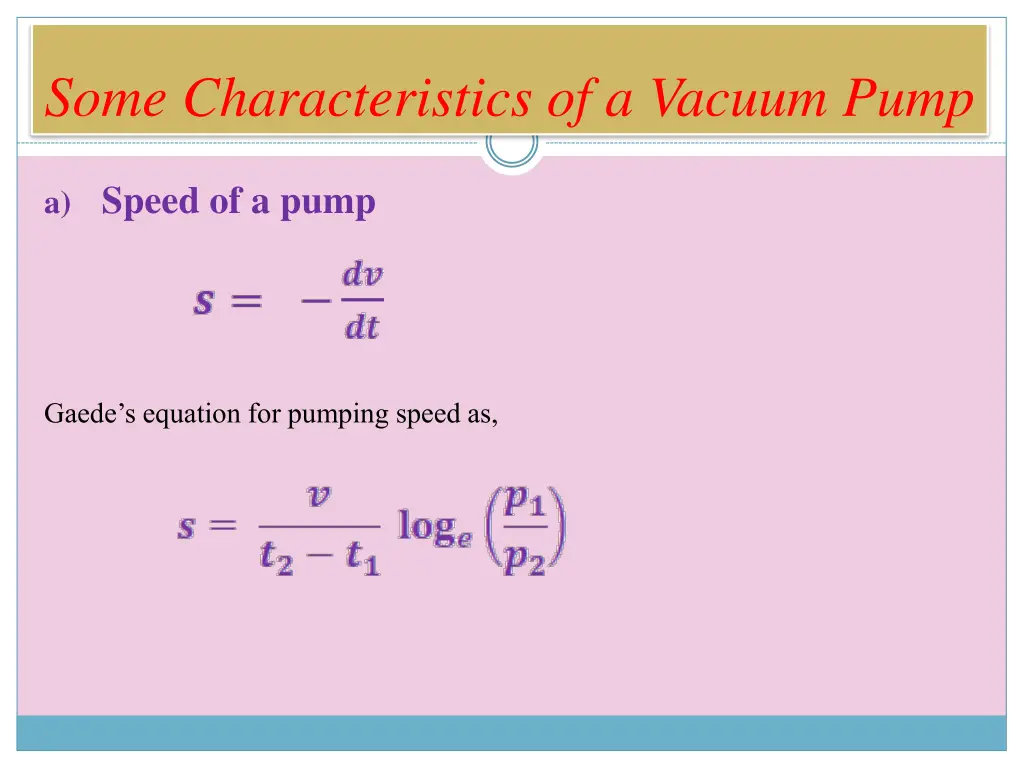
Some Characteristics of a Vacuum Pump a) Speed of a pump Gaede s equation for pumping speed as,
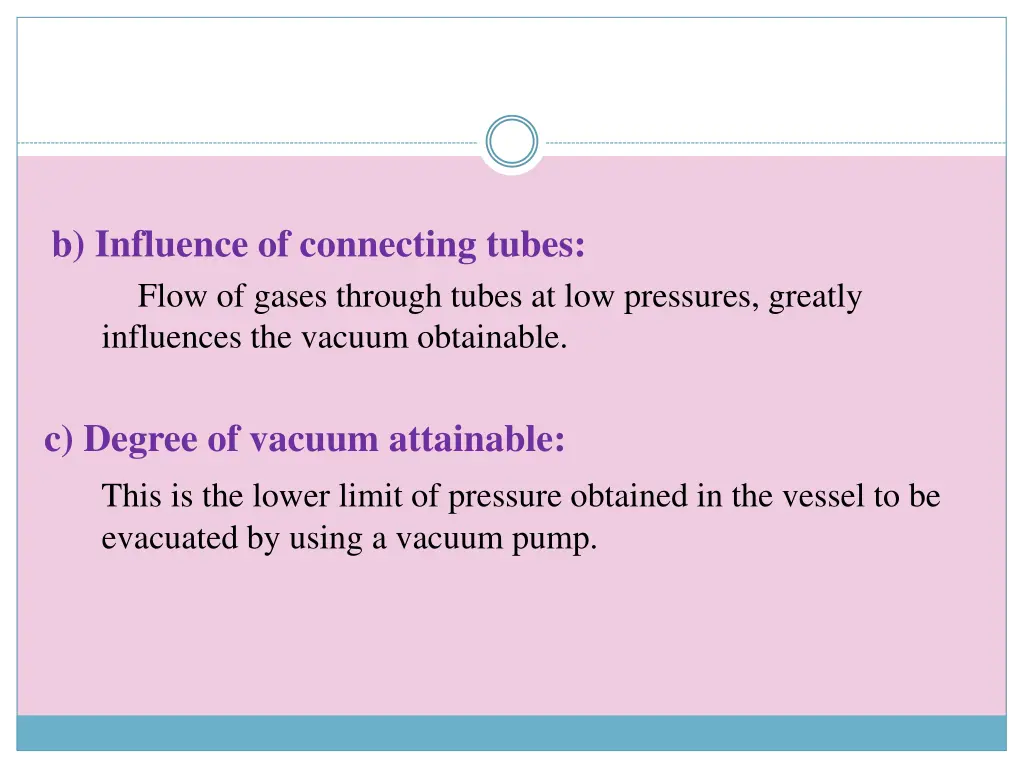
b) Influence of connecting tubes: Flow of gases through tubes at low pressures, greatly influences the vacuum obtainable. c) Degree of vacuum attainable: This is the lower limit of pressure obtained in the vessel to be evacuated by using a vacuum pump.
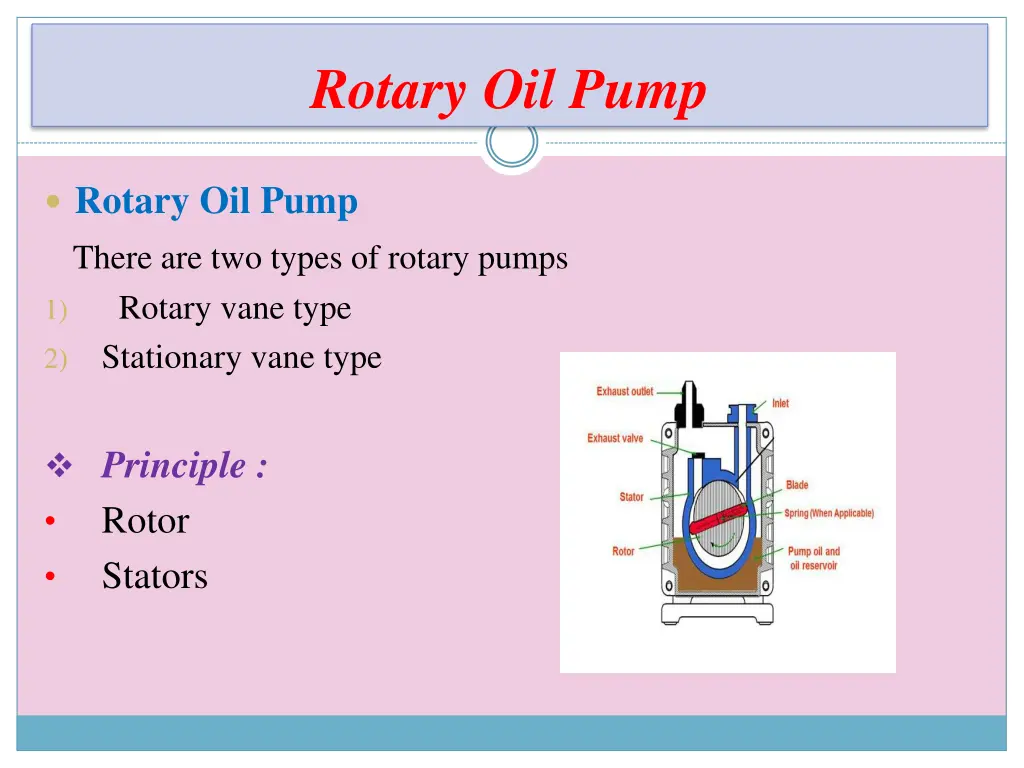
Rotary Oil Pump Rotary Oil Pump There are two types of rotary pumps Rotary vane type Stationary vane type 1) 2) Principle : Rotor Stators
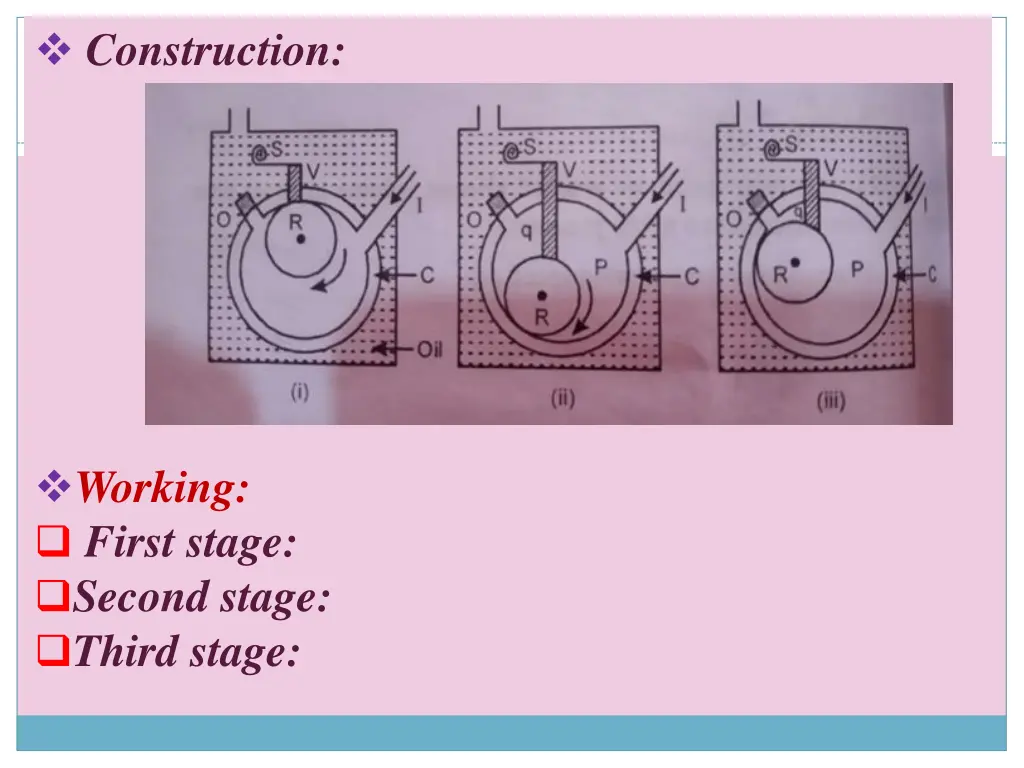
Construction: Working: First stage: Second stage: Third stage:
Diffusion pump Principle : It is produce low pressure upto 10-6 mm Construction : Working :
Molecular pump Principle: Construction:
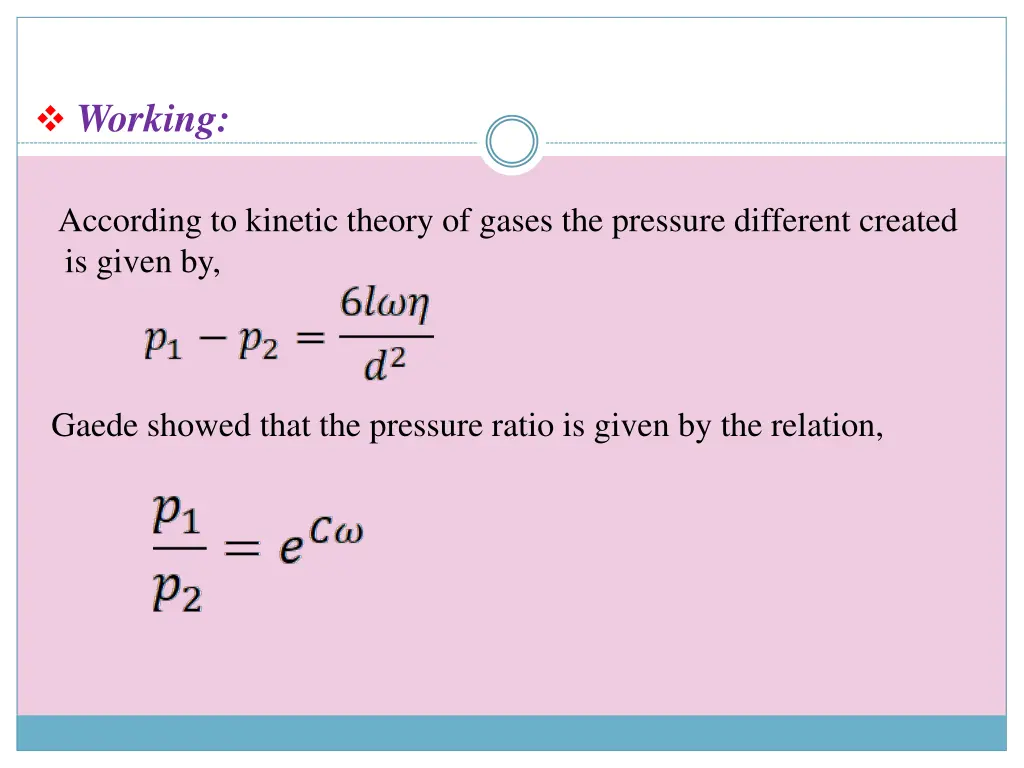
Working: According to kinetic theory of gases the pressure different created is given by, Gaede showed that the pressure ratio is given by the relation,
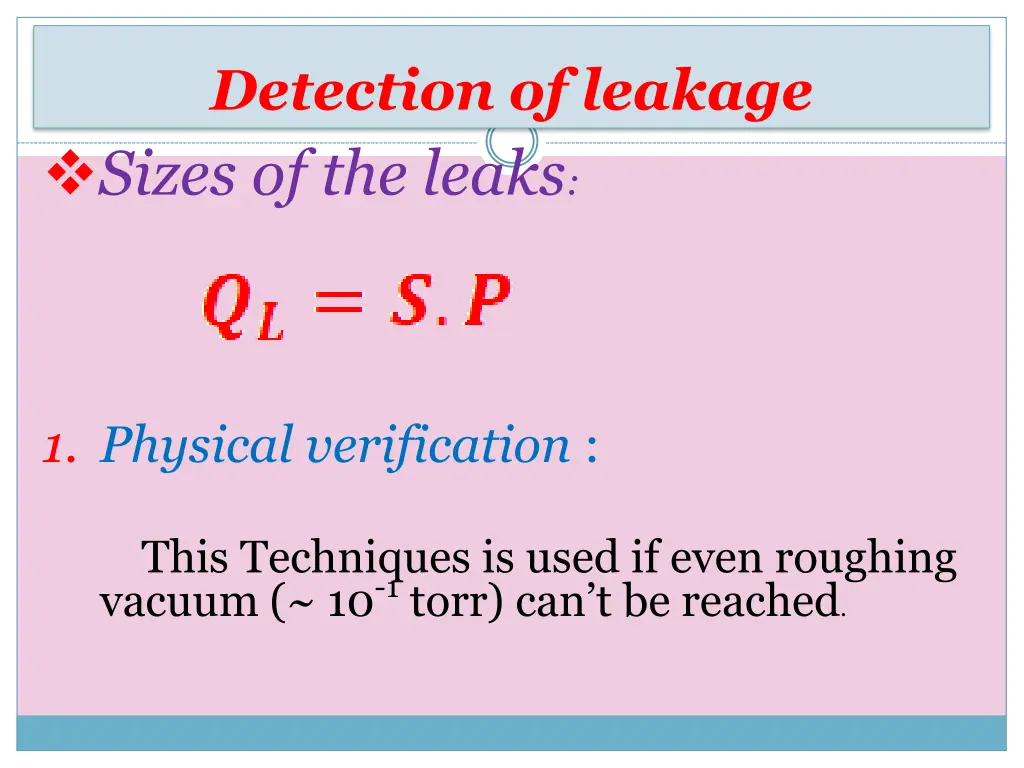
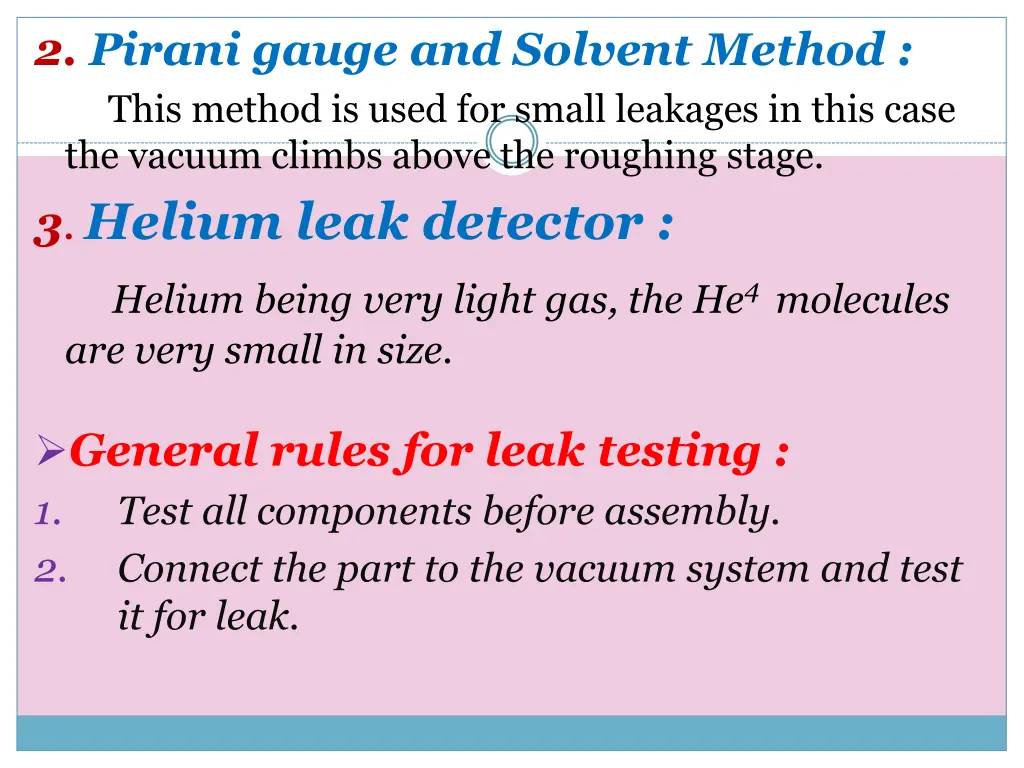
Detection of leakage Sizes of the leaks: 1. Physical verification : This Techniques is used if even roughing vacuum (~ 10-1torr) can t be reached.
2. Pirani gauge and Solvent Method : This method is used for small leakages in this case the vacuum climbs above the roughing stage. 3.Helium leak detector : Helium being very light gas, the He4 molecules are very small in size. General rules for leak testing : 1. Test all components before assembly. 2. Connect the part to the vacuum system and test it for leak.
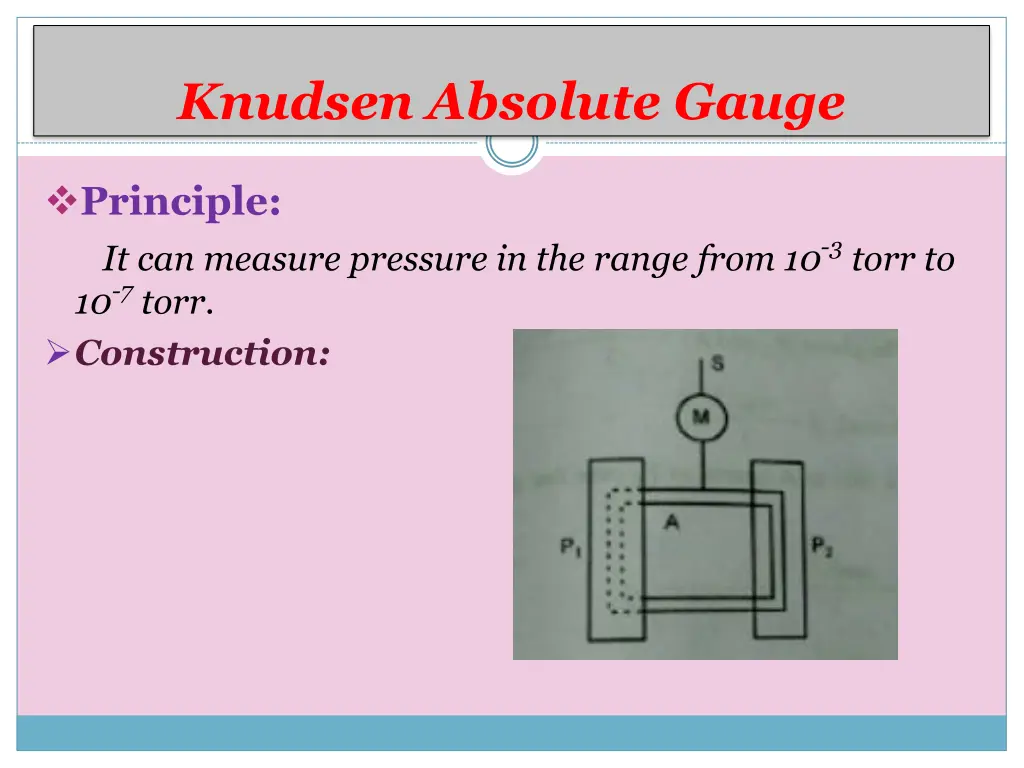
Knudsen Absolute Gauge Principle: It can measure pressure in the range from 10-3 torr to 10-7 torr. Construction:
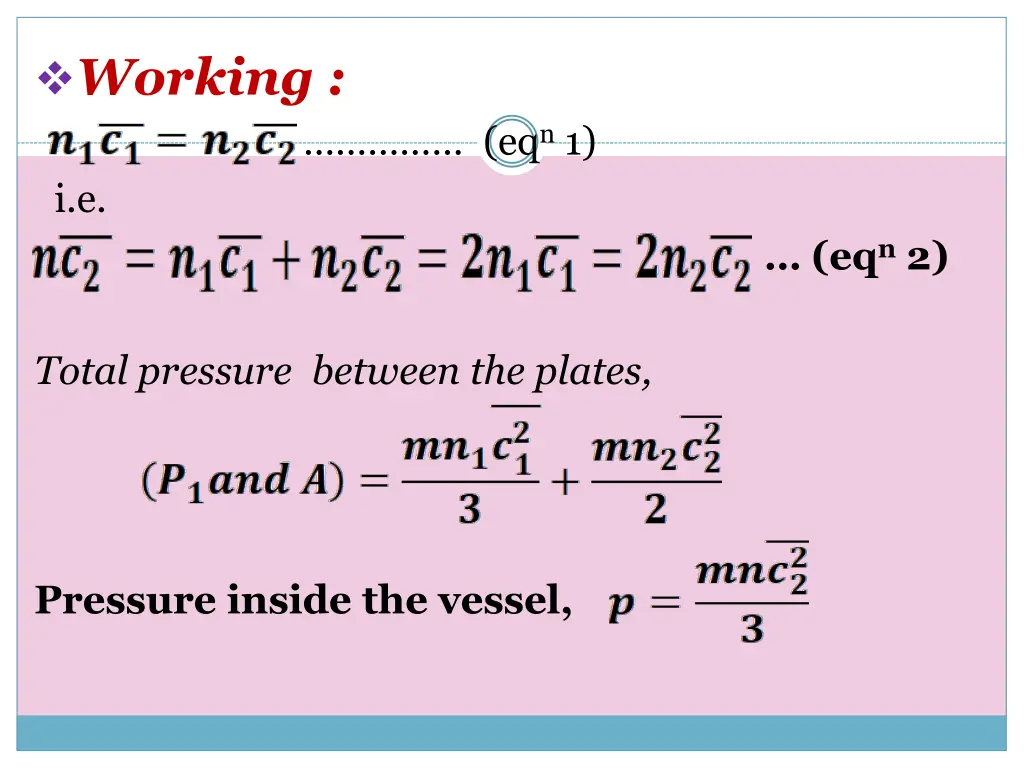
Working : (eqn 1) i.e. (eqn 2) Total pressure between the plates, Pressure inside the vessel,
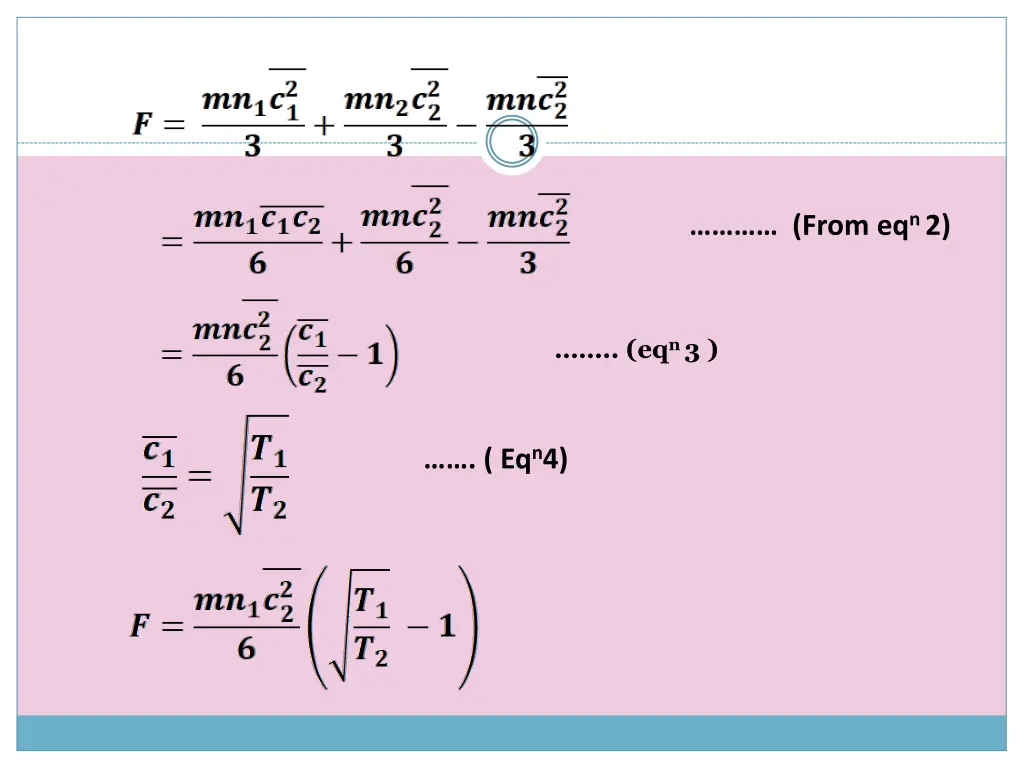
(From eqn 2) .. (eqn 3 ) . ( Eqn4)
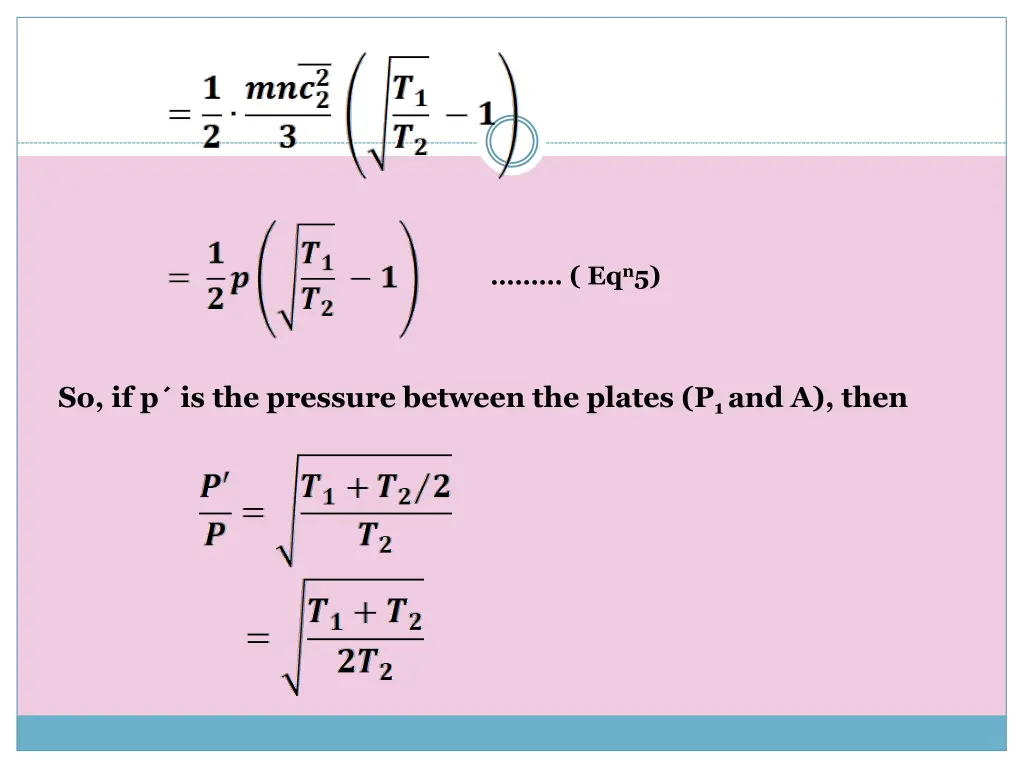
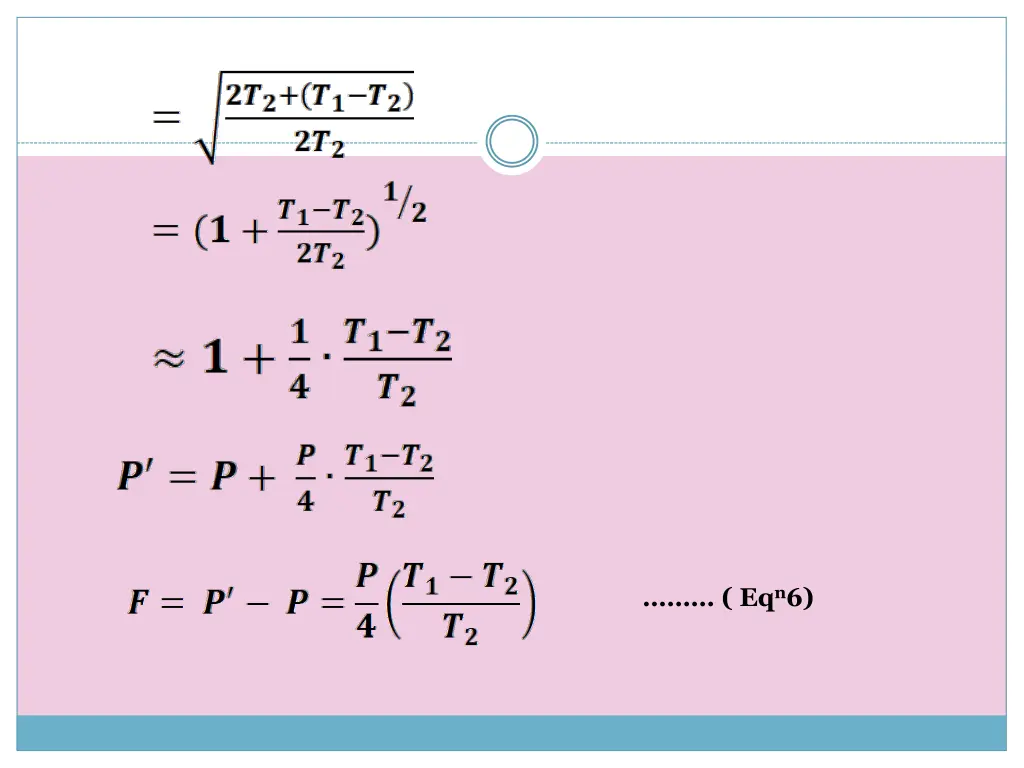
( Eqn5) So, if p is the pressure between the plates (P1 and A), then
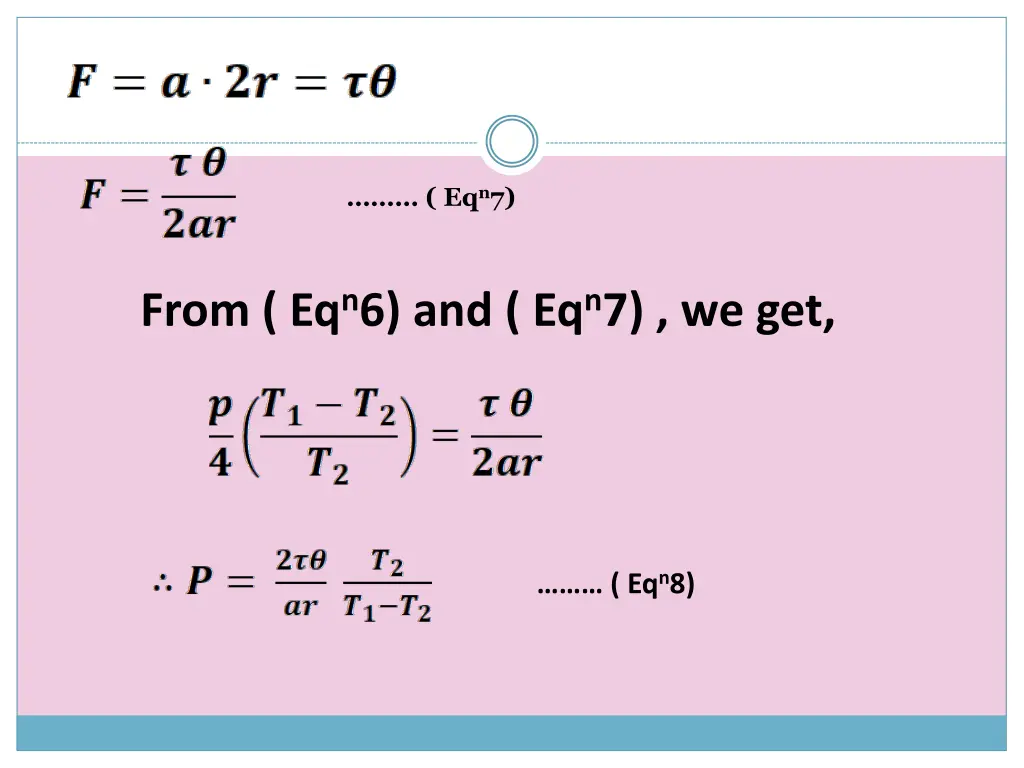
( Eqn7) From ( Eqn6) and ( Eqn7) , we get, ( Eqn8)
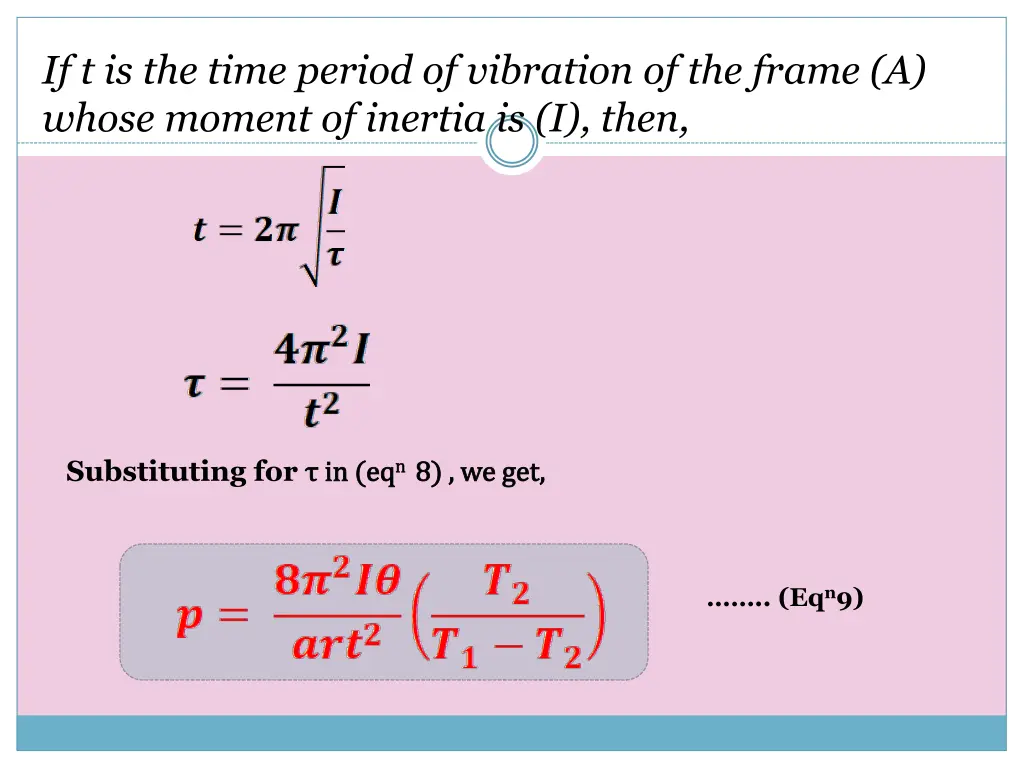
If t is the time period of vibration of the frame (A) whose moment of inertia is (I), then, Substituting for in (eq in (eqn n 8) , we get, 8) , we get, .. (Eqn9)
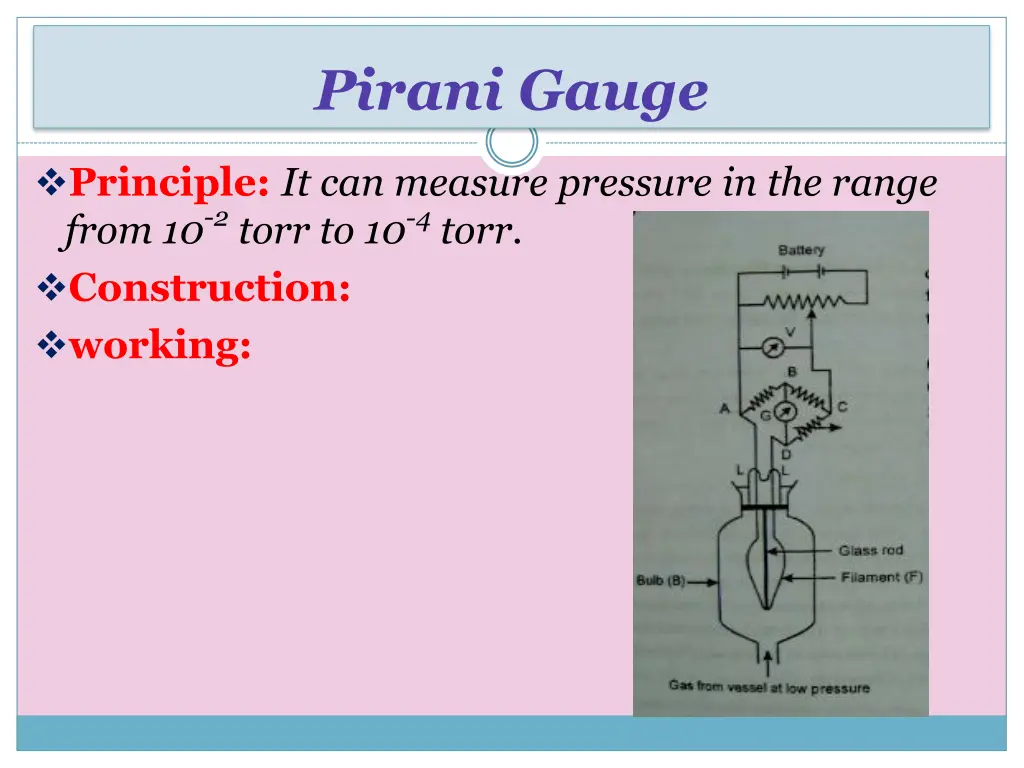
Pirani Gauge Principle: It can measure pressure in the range from 10-2 torr to 10-4 torr. Construction: working: