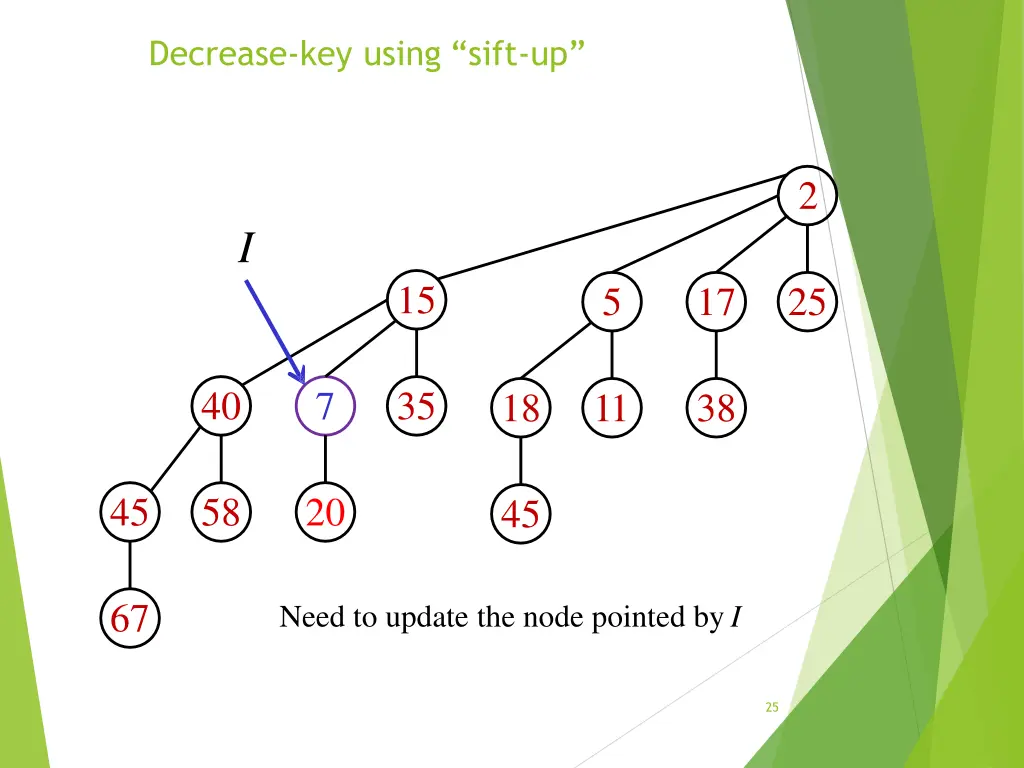
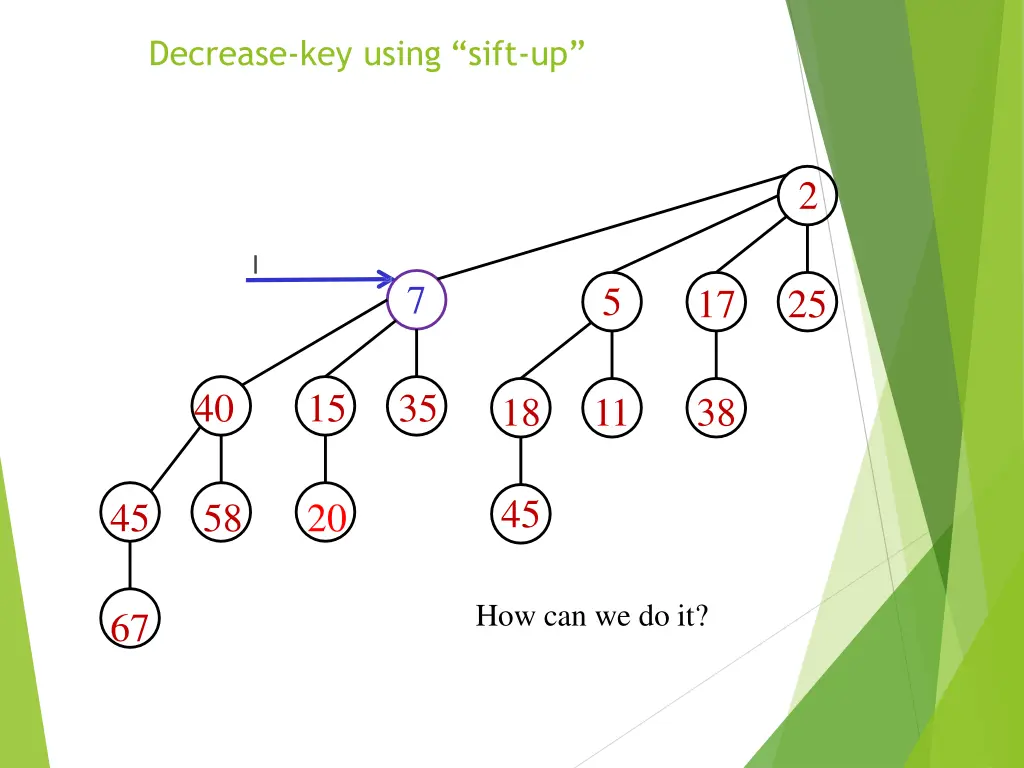
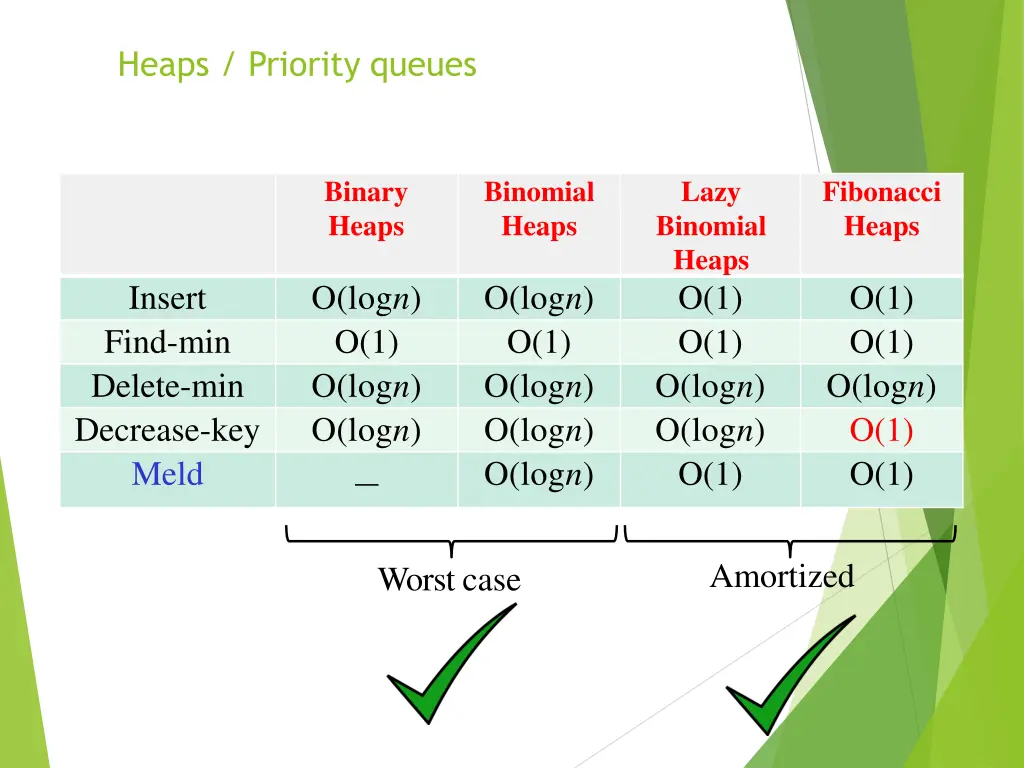
Dive into the world of advanced data structures with a focus on heaps, binomial trees, and tournament structures. Understand their characteristics, operations, and applications. Discover the efficiency and versatility offered by these structures in various algorithms and scenarios.
Please find below an Image/Link to download the presentation.
The content on the website is provided AS IS for your information and personal use only. It may not be sold, licensed, or shared on other websites without obtaining consent from the author. If you encounter any issues during the download, it is possible that the publisher has removed the file from their server.
You are allowed to download the files provided on this website for personal or commercial use, subject to the condition that they are used lawfully. All files are the property of their respective owners.
The content on the website is provided AS IS for your information and personal use only. It may not be sold, licensed, or shared on other websites without obtaining consent from the author.
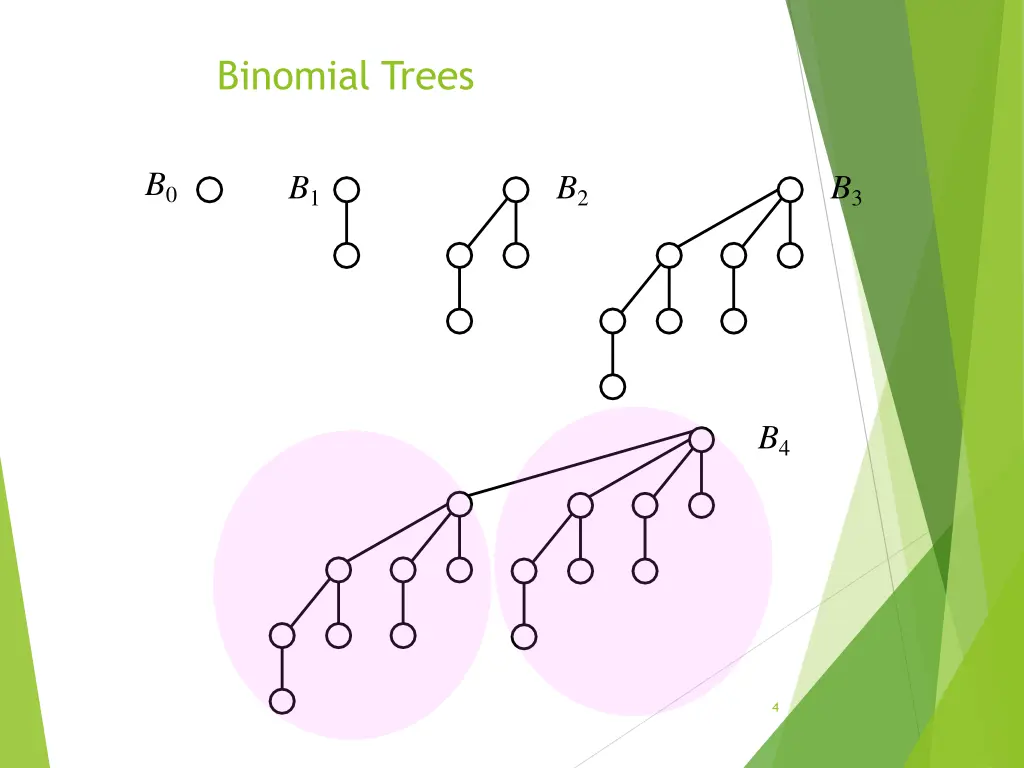
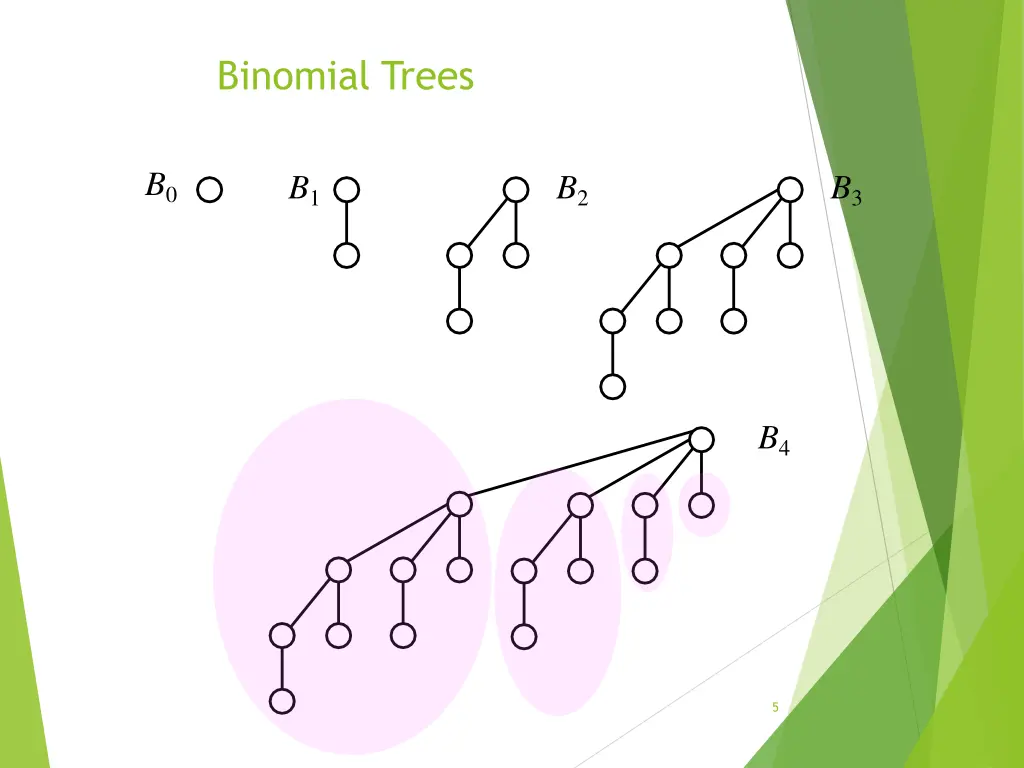
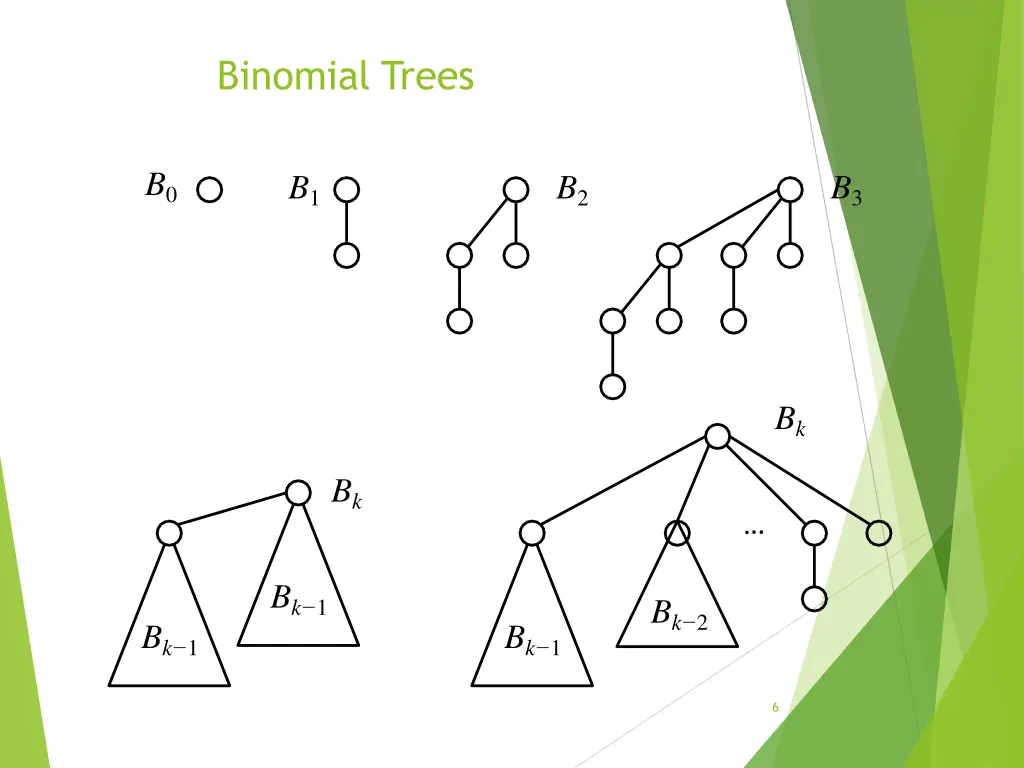
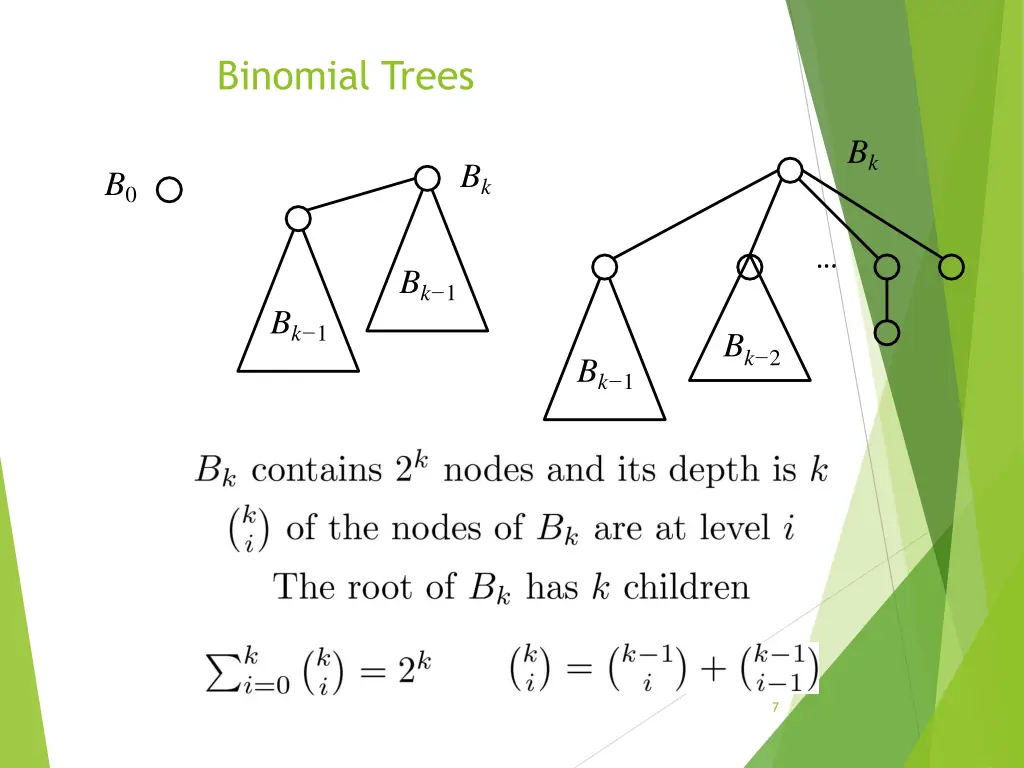
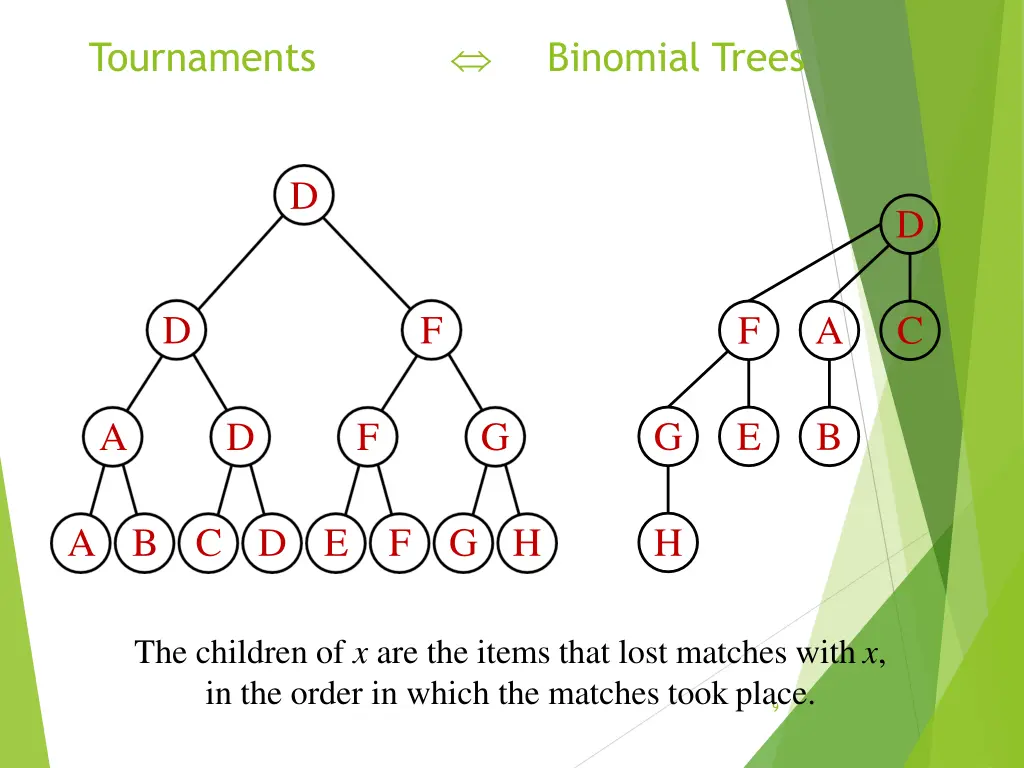
Tournaments Binomial Trees D D D F F A C G E B A D F G A B C D E F G H H The children of x are the items that lost matches withx, in the order in which the matches tookplace. 9
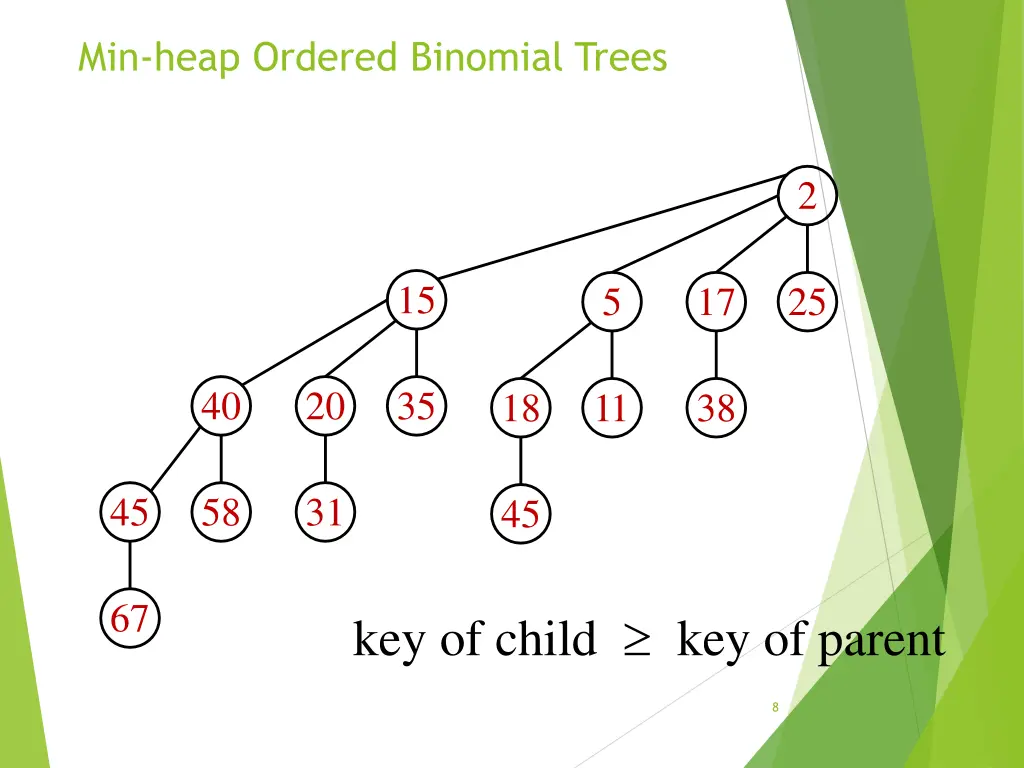
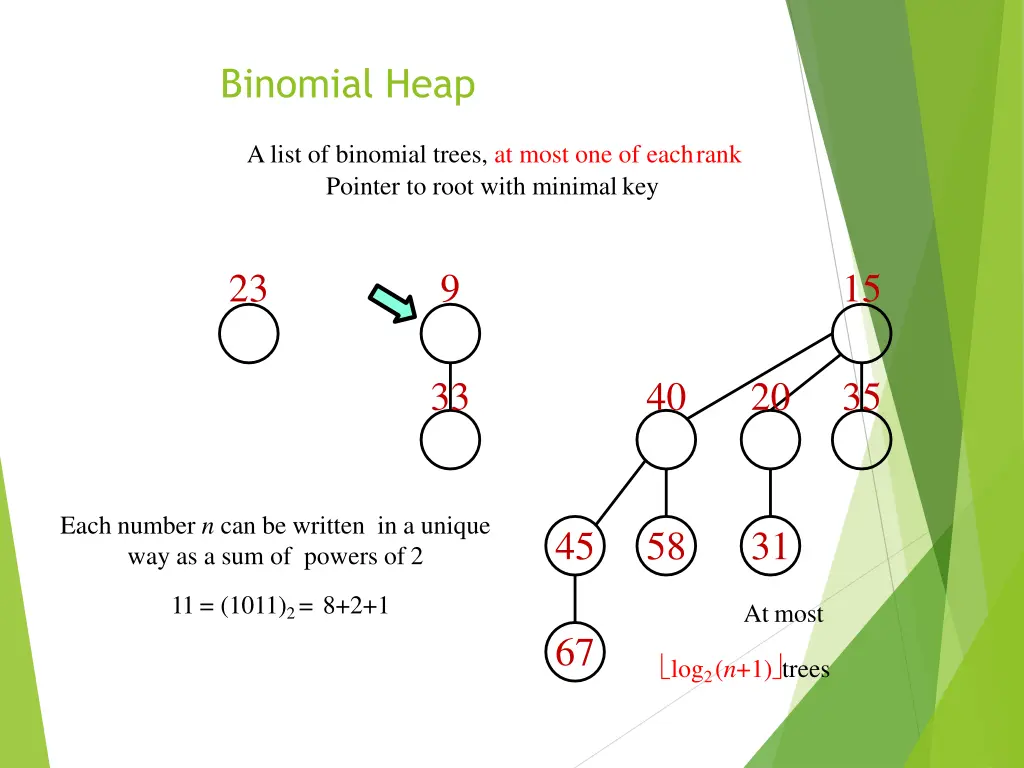
Binomial Heap A list of binomial trees, at most one of eachrank Pointer to root with minimalkey 23 9 15 33 40 20 35 Each number n can be written in a unique way as a sum of powers of 2 45 58 31 11 = (1011)2 = 8+2+1 At most 67 log2(n+1) trees
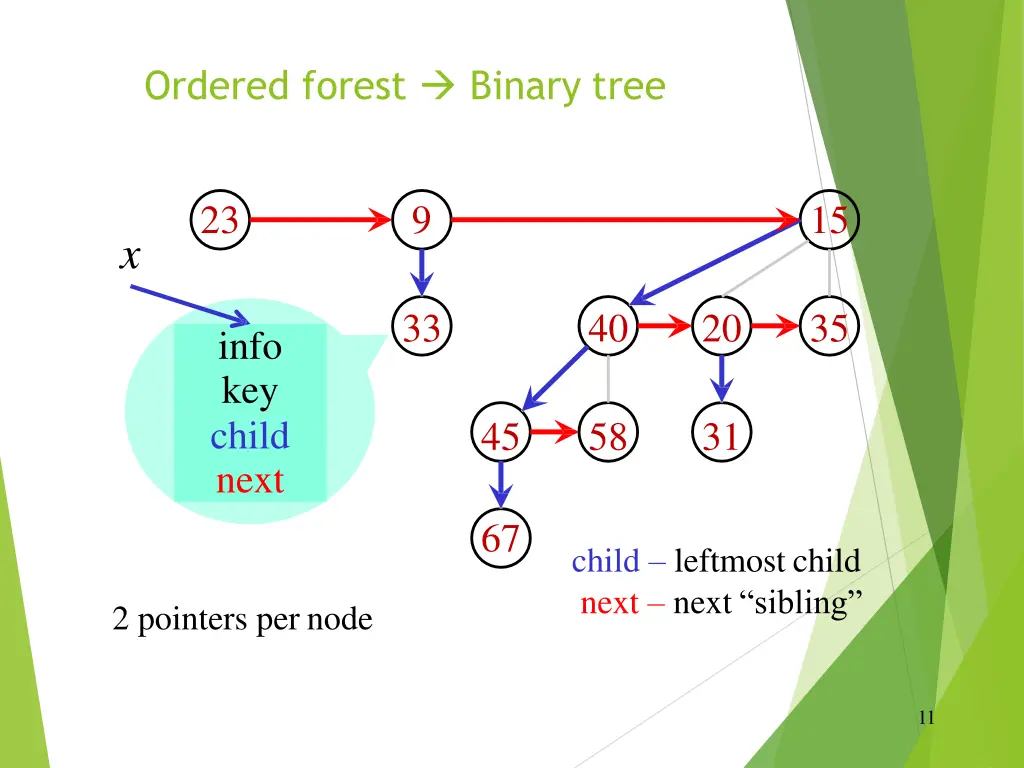
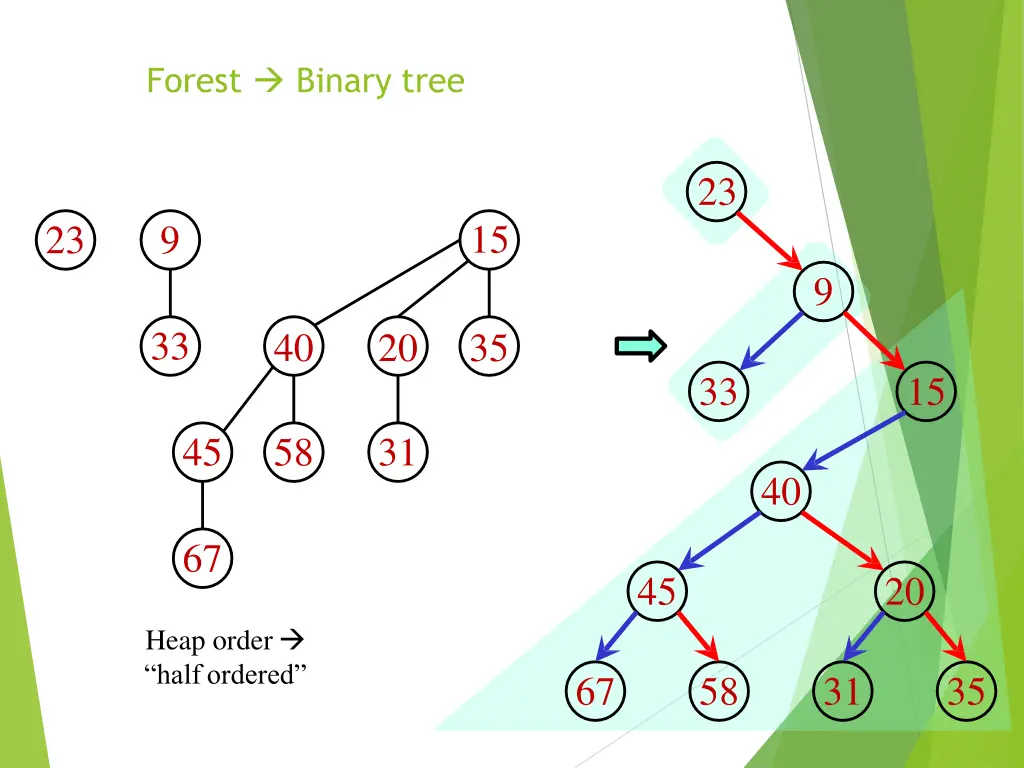
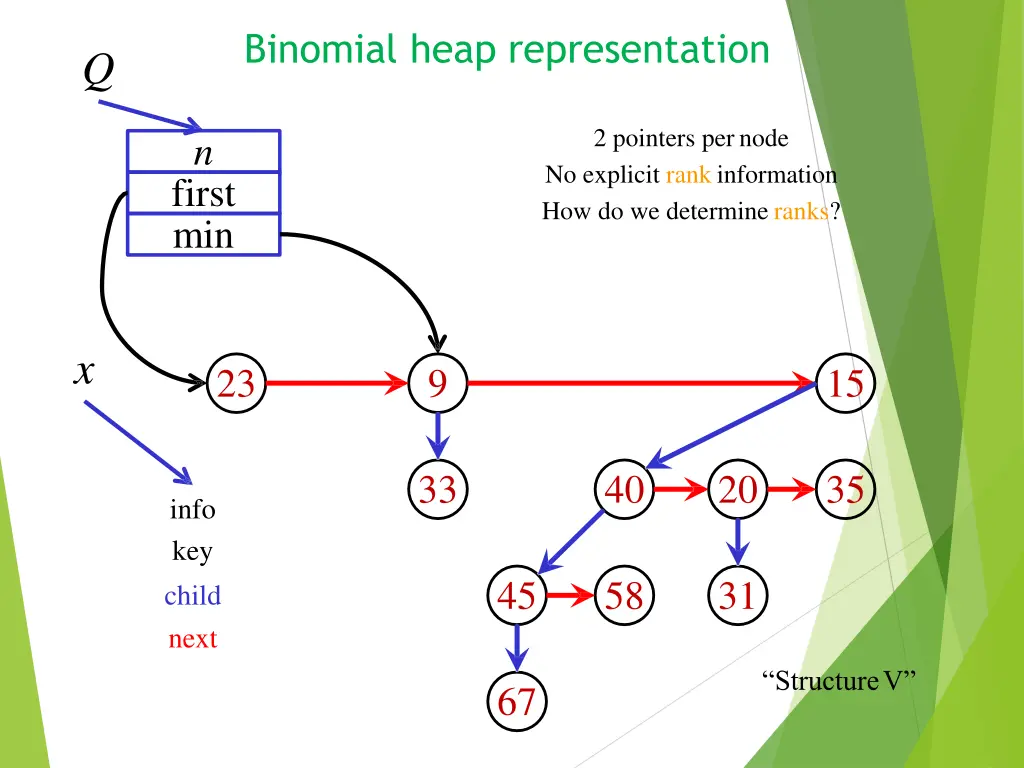
Ordered forest Binary tree 23 9 15 x 33 40 20 35 info key child next 45 58 31 67 child leftmost child next next sibling 2 pointers per node 11
Binomial heap representation Q 2 pointers pernode No explicit rank information How do we determine ranks? n first min x 23 9 15 33 40 20 35 info key child next 31 45 58 StructureV 67
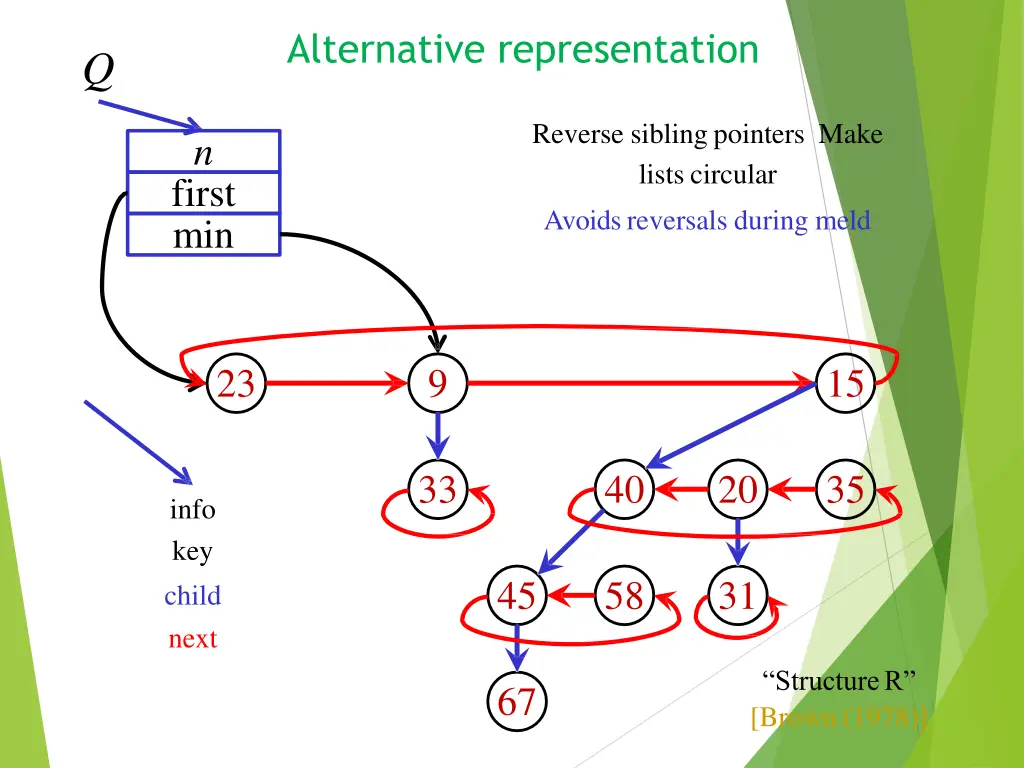
Alternative representation Q Reverse siblingpointers Make lists circular Avoids reversals during meld n first min 23 9 15 33 40 20 35 info key child next 31 45 58 StructureR [Brown(1978)] 67
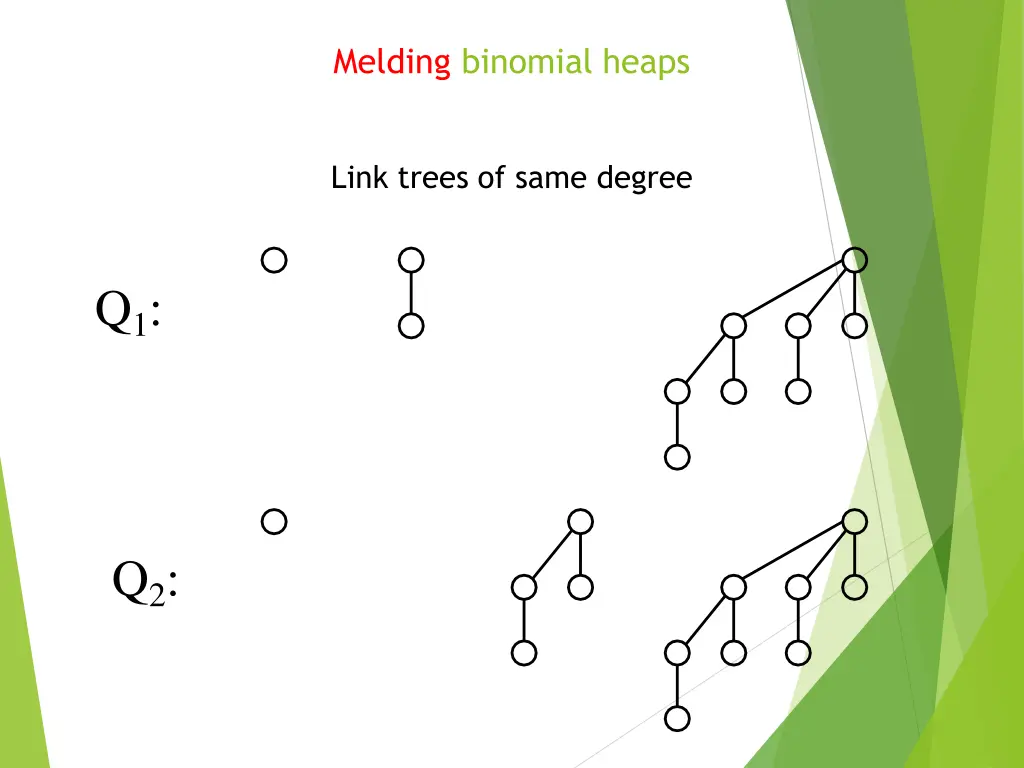
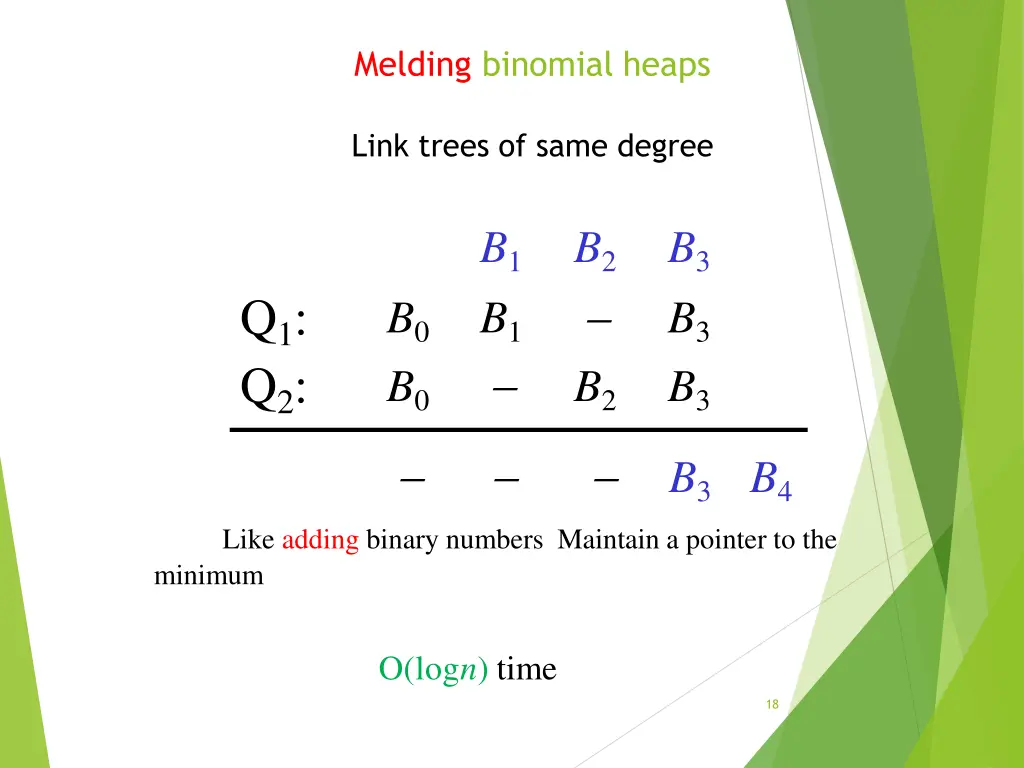
Melding binomial heaps Link trees of same degree B1 B1 B2 B2 B3 B3 B3 Q1: Q2: B0 B0 B3 B4 Like adding binary numbers Maintain a pointer to the minimum O(logn) time 18
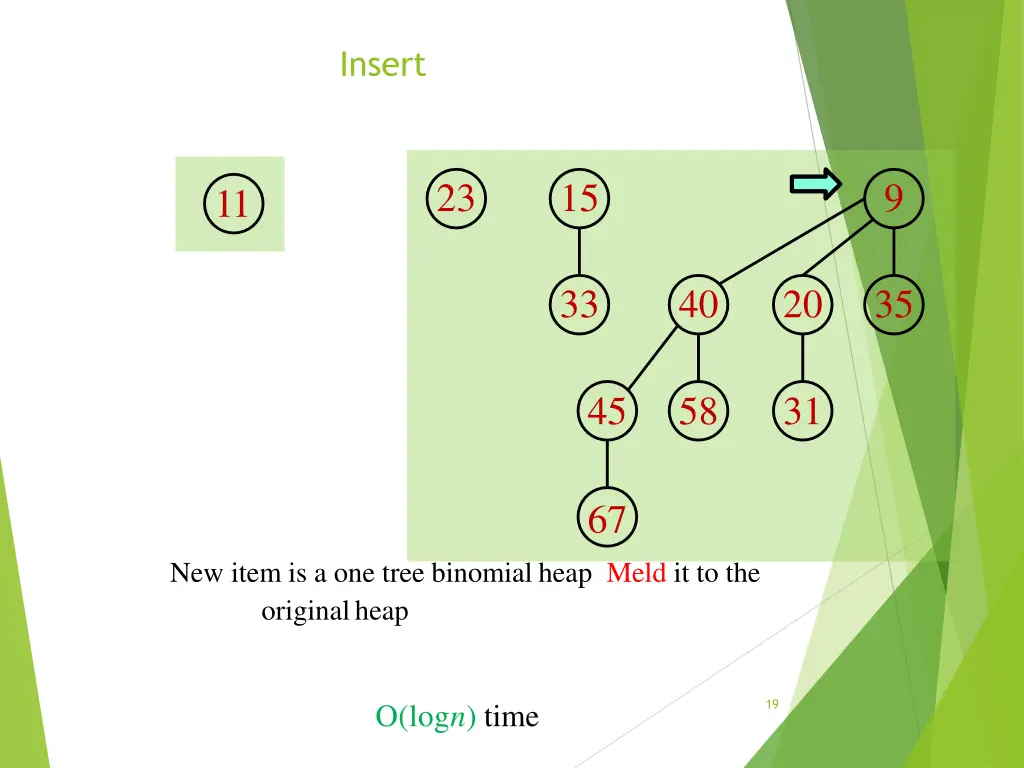
Insert 23 15 9 11 33 40 20 35 45 58 31 67 New item is a one tree binomial heap Meld it to the originalheap 19 O(logn) time
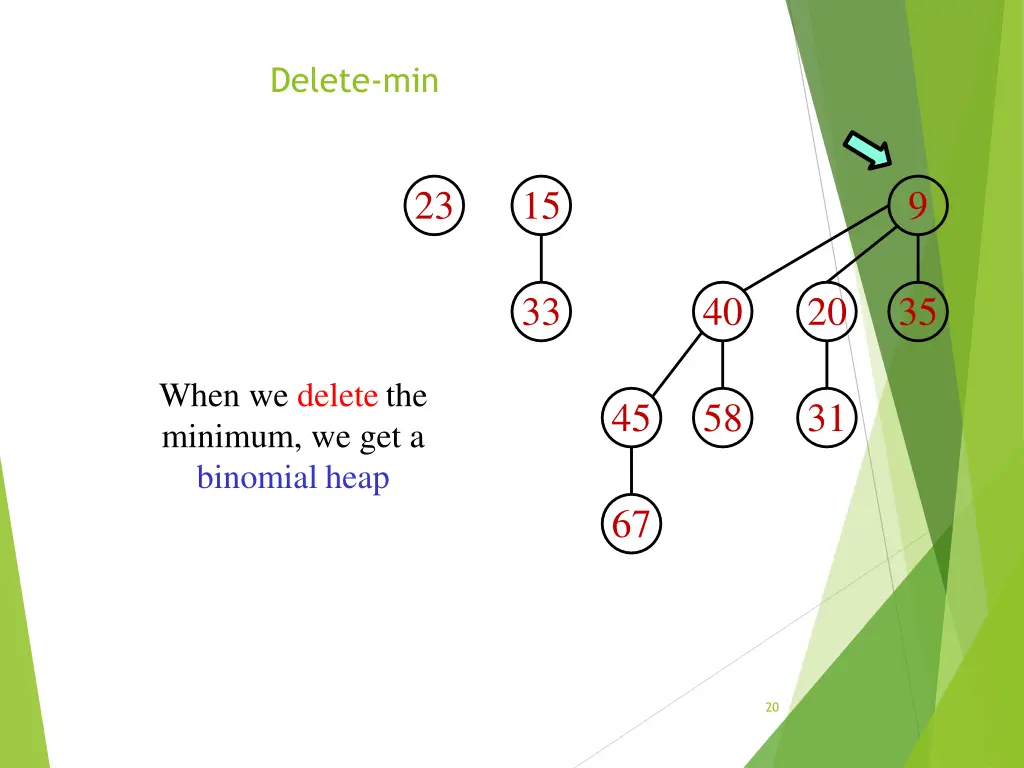
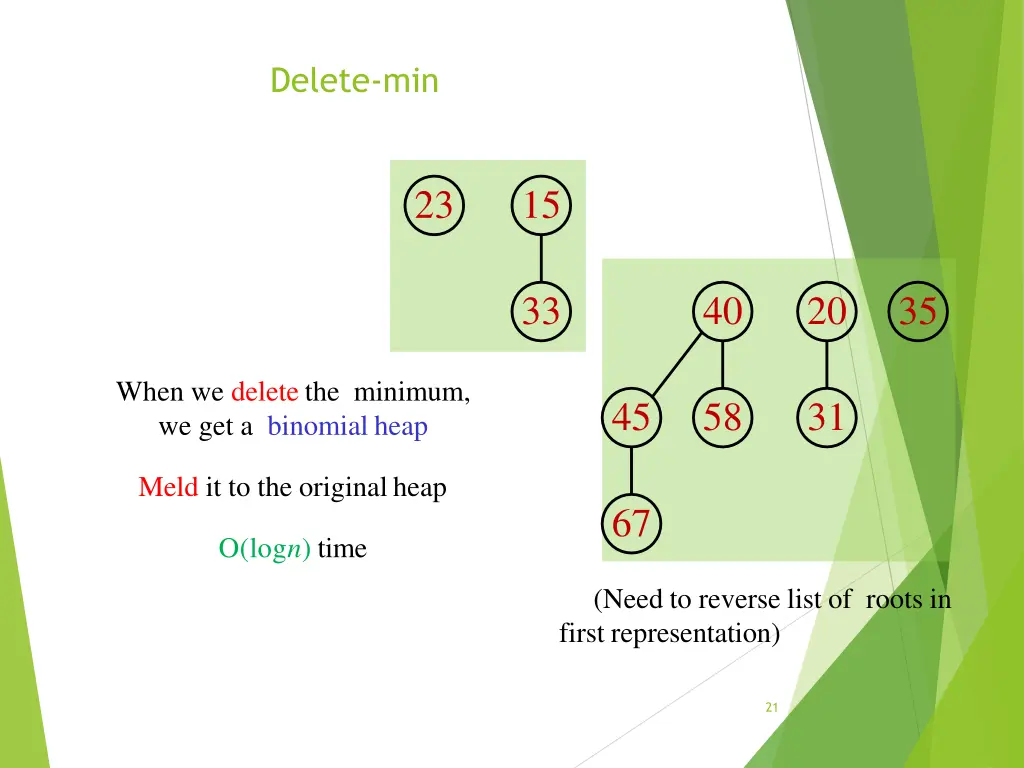
Delete-min 23 15 9 33 40 20 35 When we delete the minimum, we get a binomial heap 45 58 31 67 20
Delete-min 23 15 33 40 20 35 When we delete the minimum, we get a binomial heap 45 58 31 Meld it to the originalheap 67 O(logn) time (Need to reverse list of roots in first representation) 21
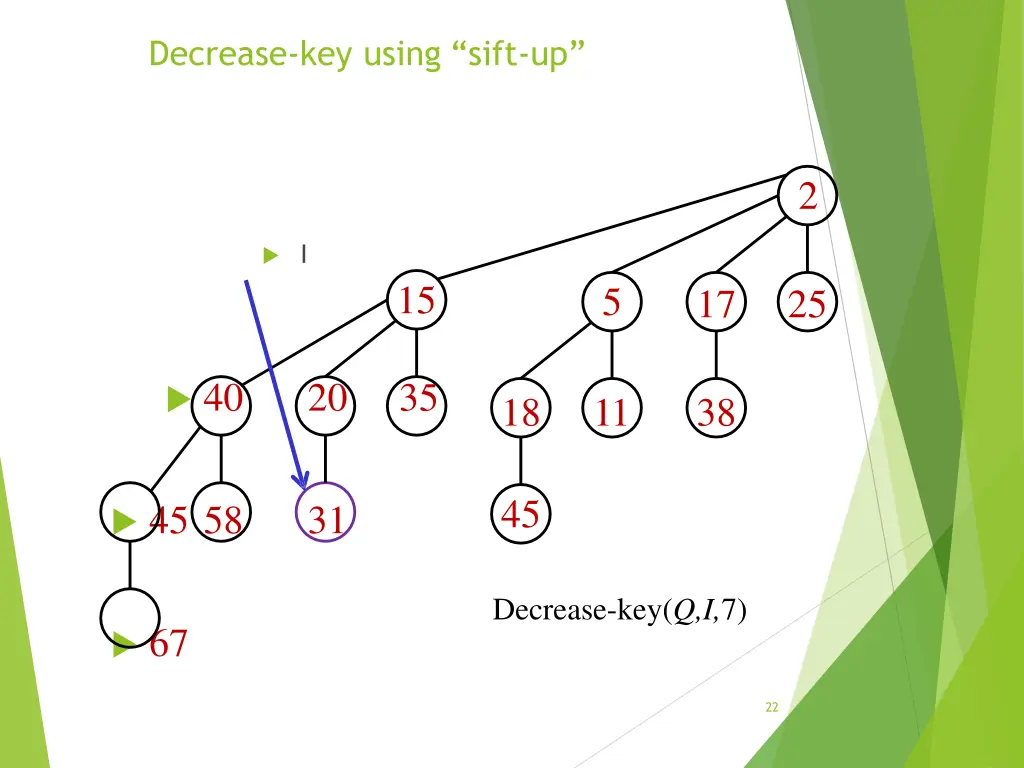
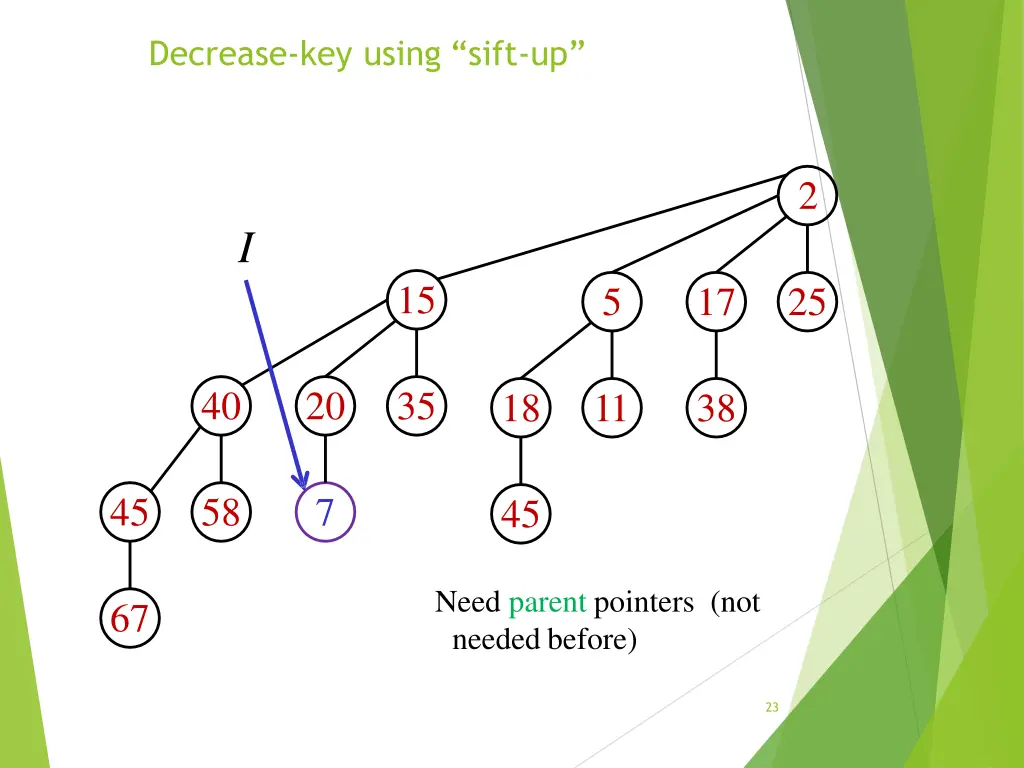
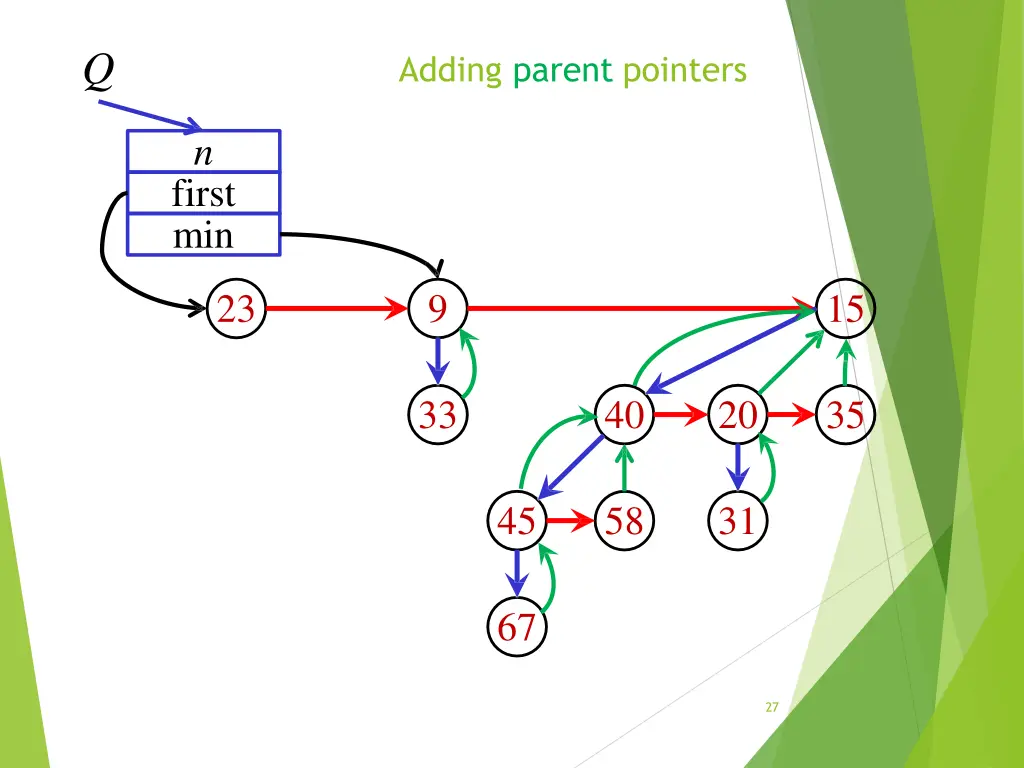
Q Adding parent pointers n first min 23 9 15 33 20 35 40 45 58 31 67 27
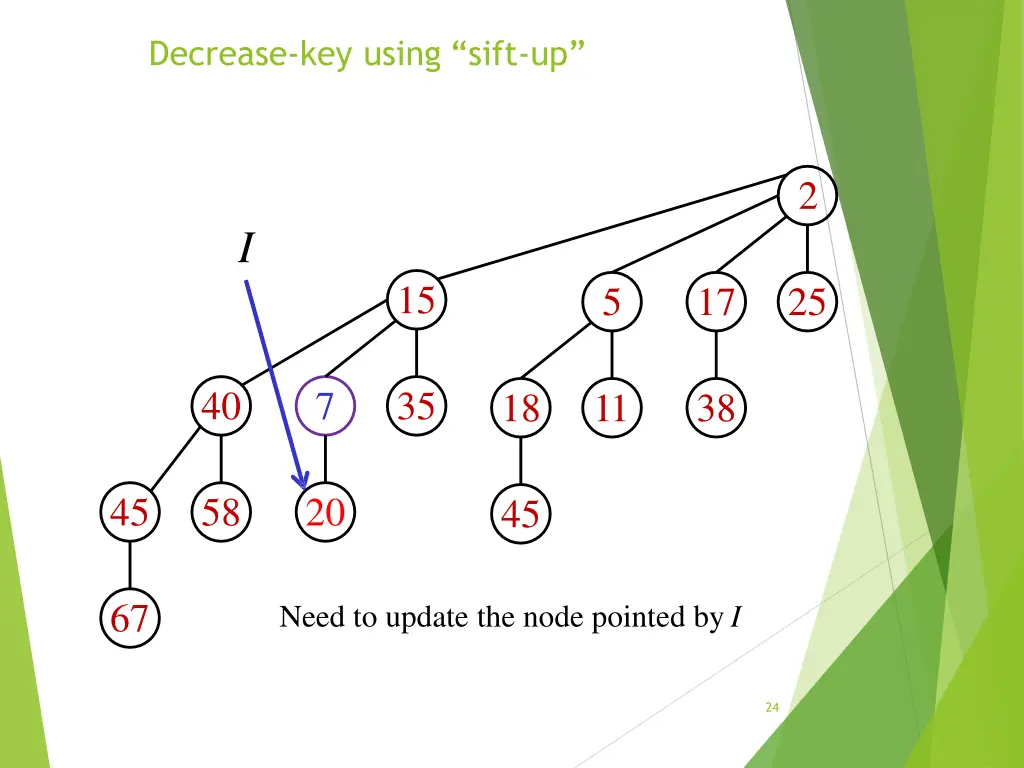
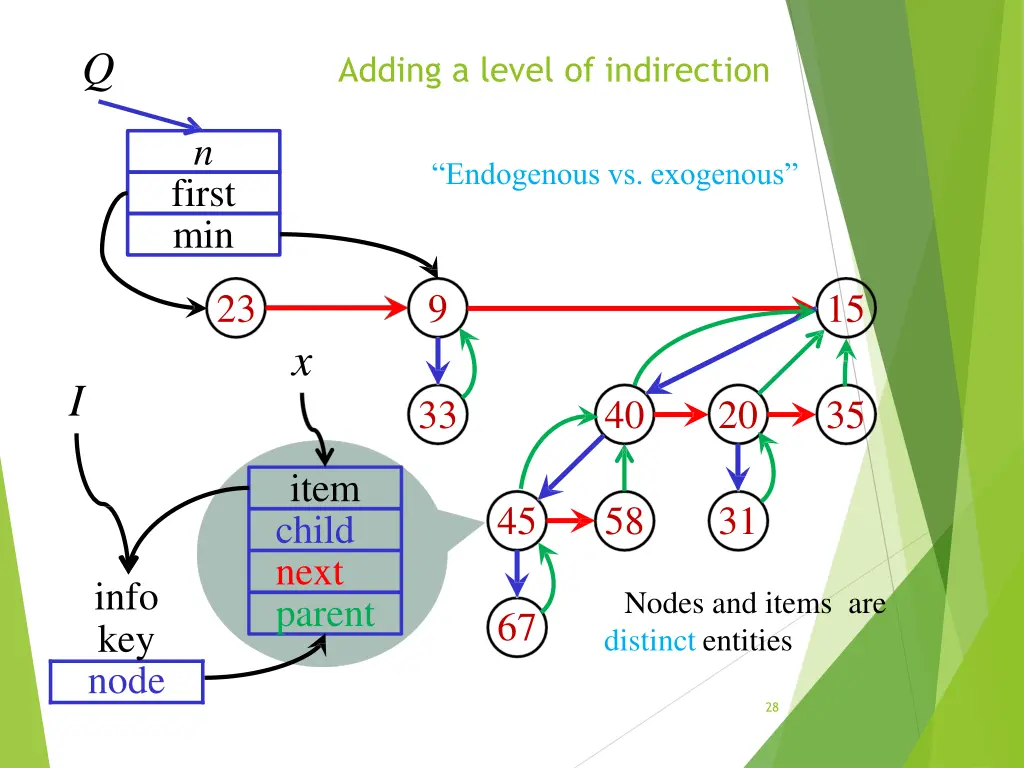
Q Adding a level of indirection n Endogenous vs. exogenous first min 23 9 15 x I 33 20 35 40 item child next parent 45 58 31 info key node Nodes and items are distinct entities 67 28
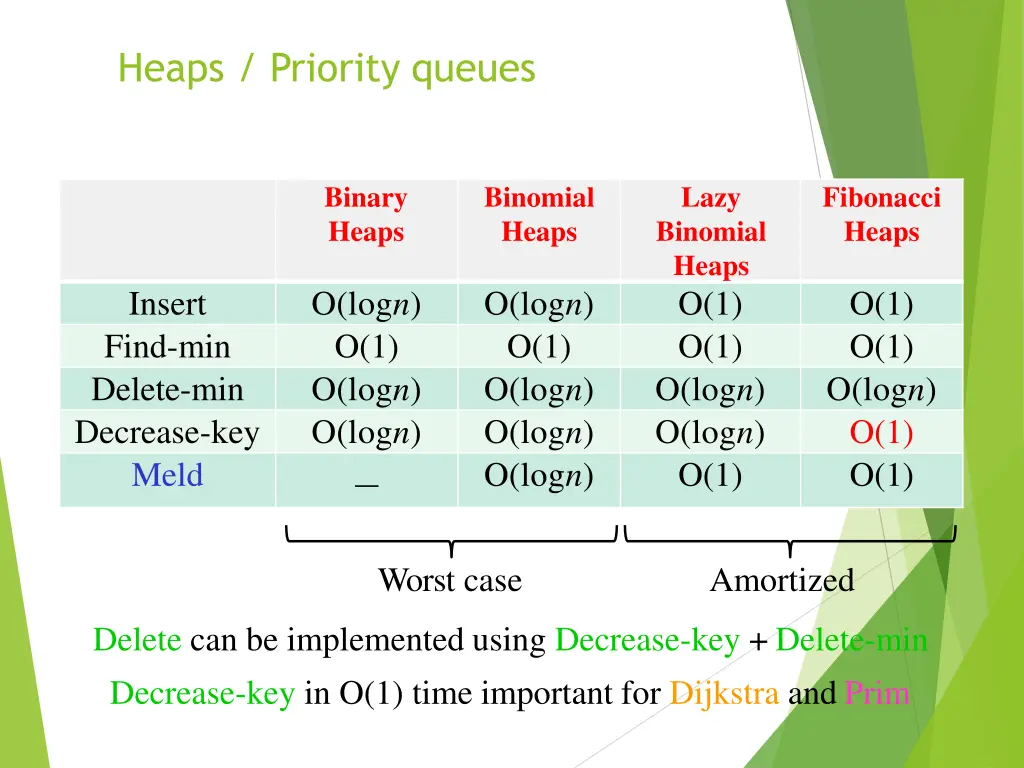
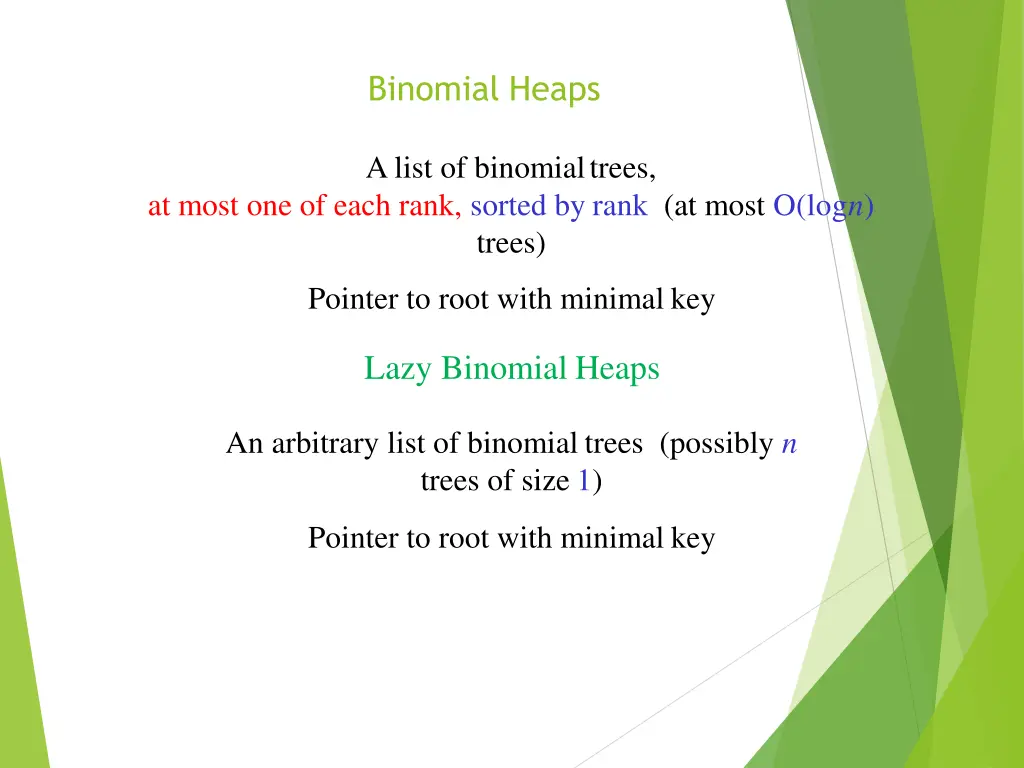
Binomial Heaps A list of binomialtrees, at most one of each rank, sorted by rank (at most O(logn) trees) Pointer to root with minimal key Lazy Binomial Heaps An arbitrary list of binomial trees (possibly n trees of size 1) Pointer to root with minimal key
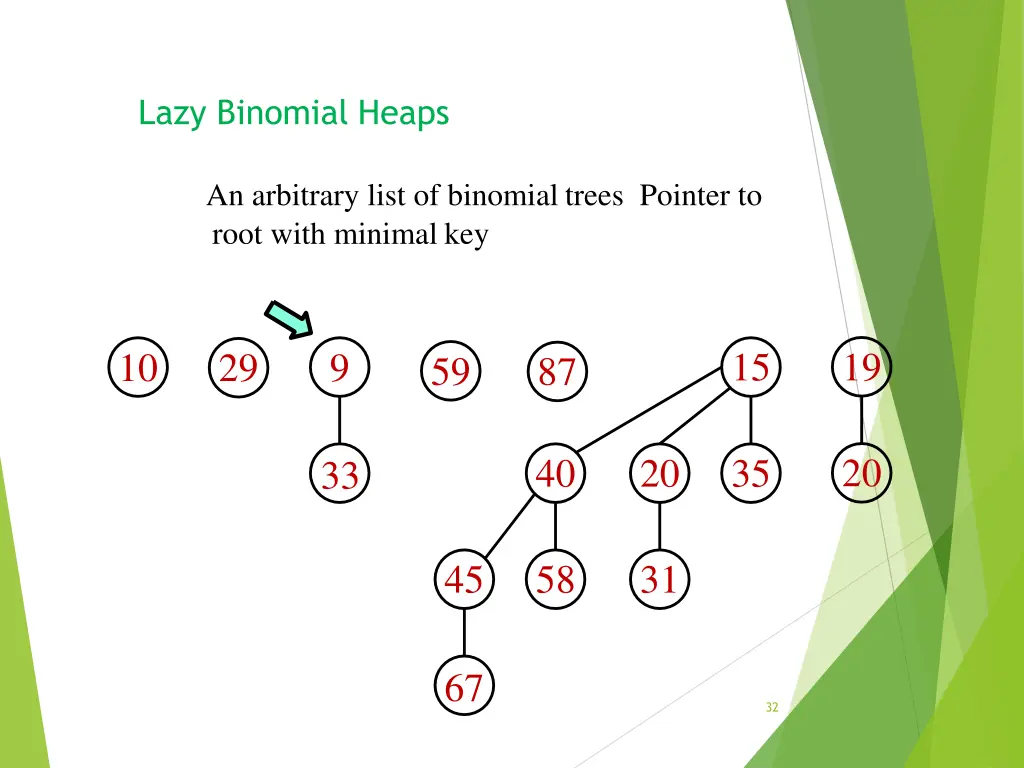
Lazy Binomial Heaps An arbitrary list of binomial trees Pointer to root with minimal key 15 19 10 29 9 59 87 20 40 20 35 33 45 58 31 67 32
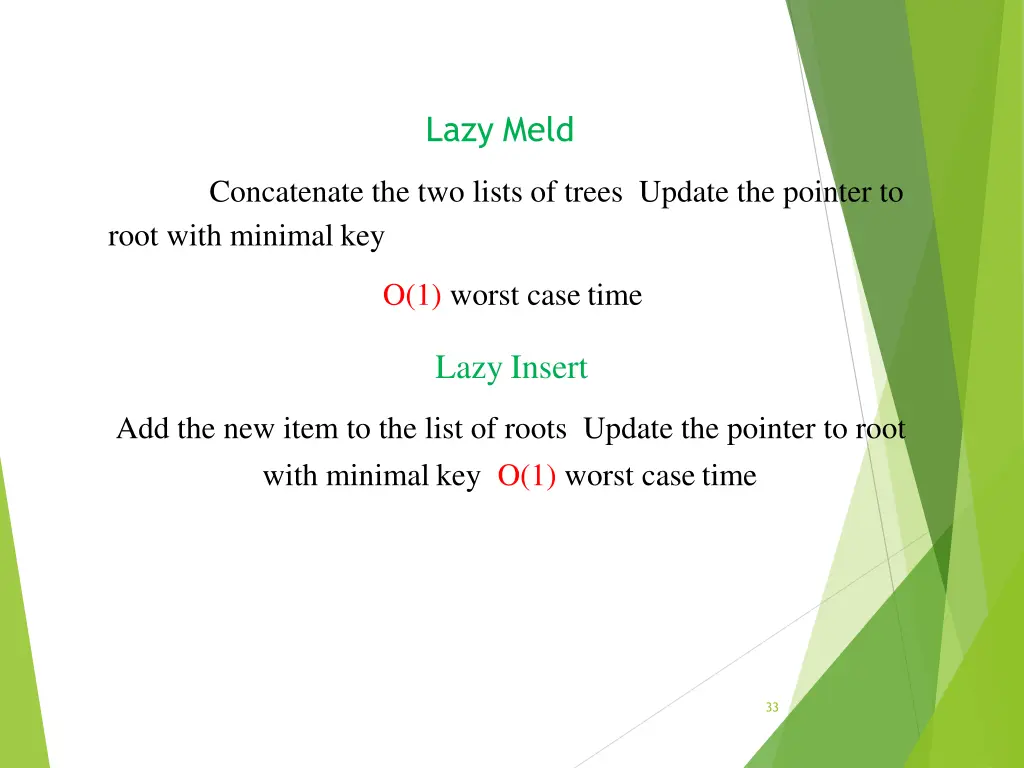
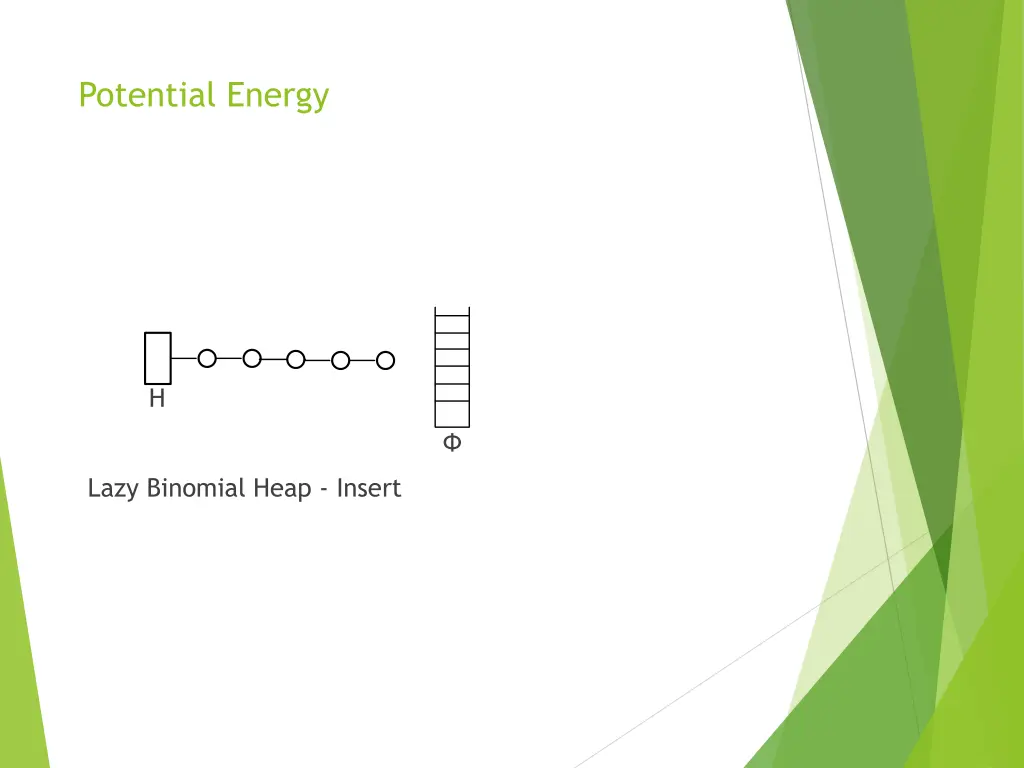
Lazy Meld Concatenate the two lists of trees Update the pointer to root with minimal key O(1) worst case time Lazy Insert Add the new item to the list of roots Update the pointer to root with minimal key O(1) worst case time 33
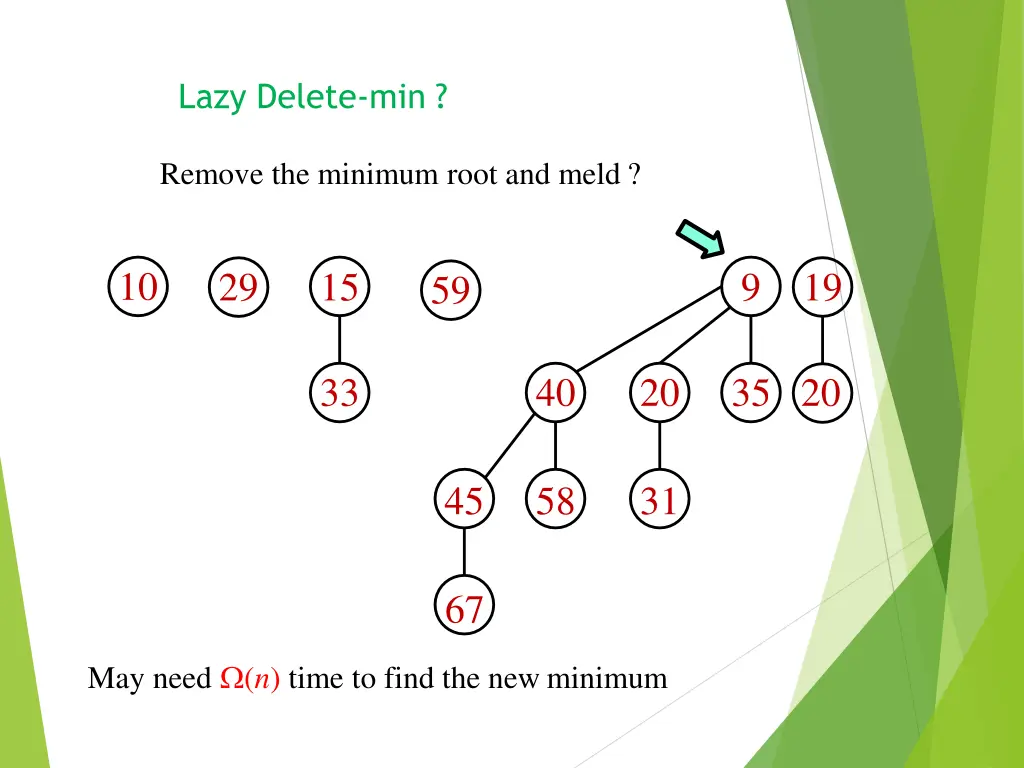
Lazy Delete-min ? Remove the minimum root and meld ? 10 29 15 9 19 59 33 40 20 35 20 45 58 31 67 May need (n) time to find the new minimum
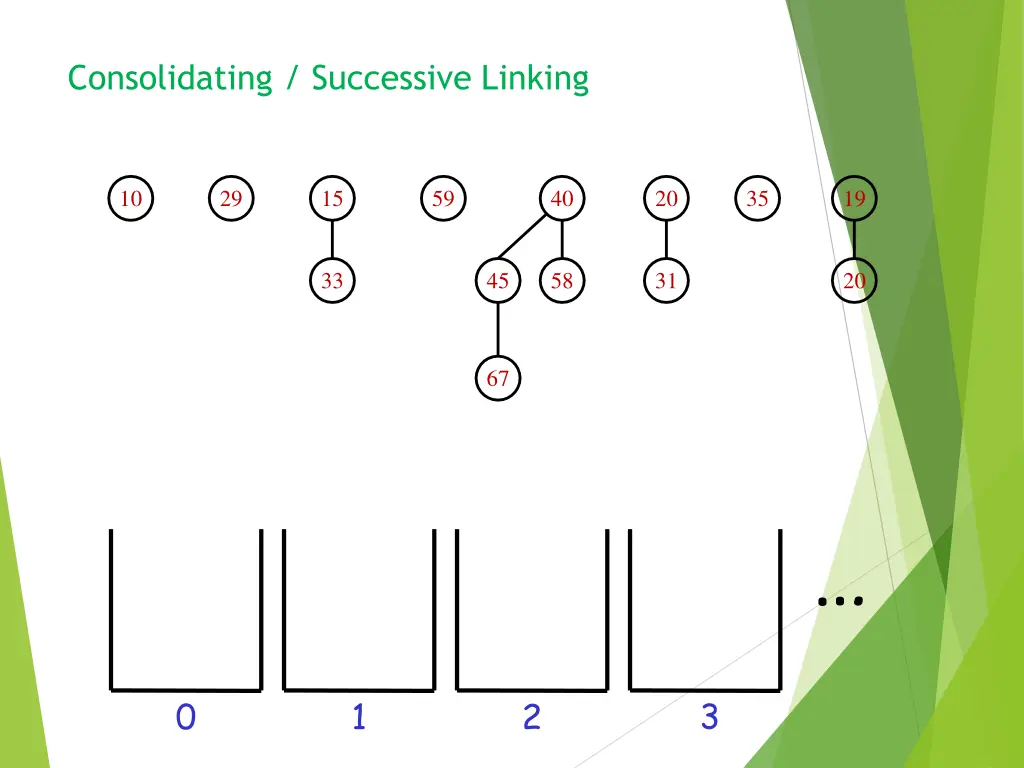
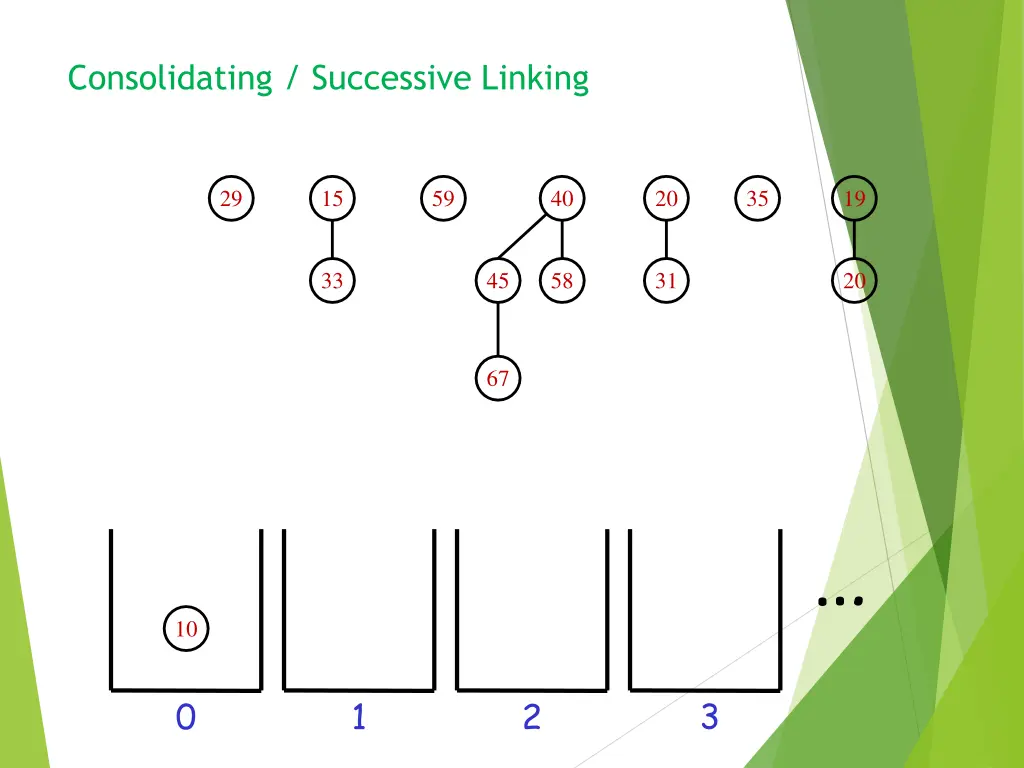
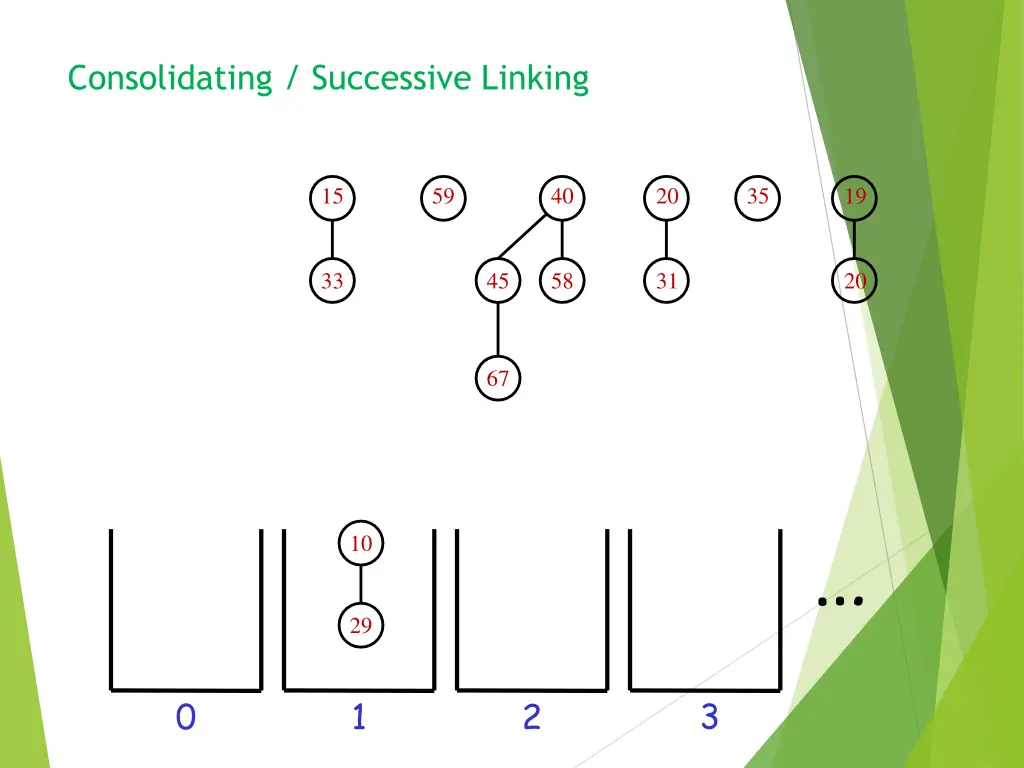
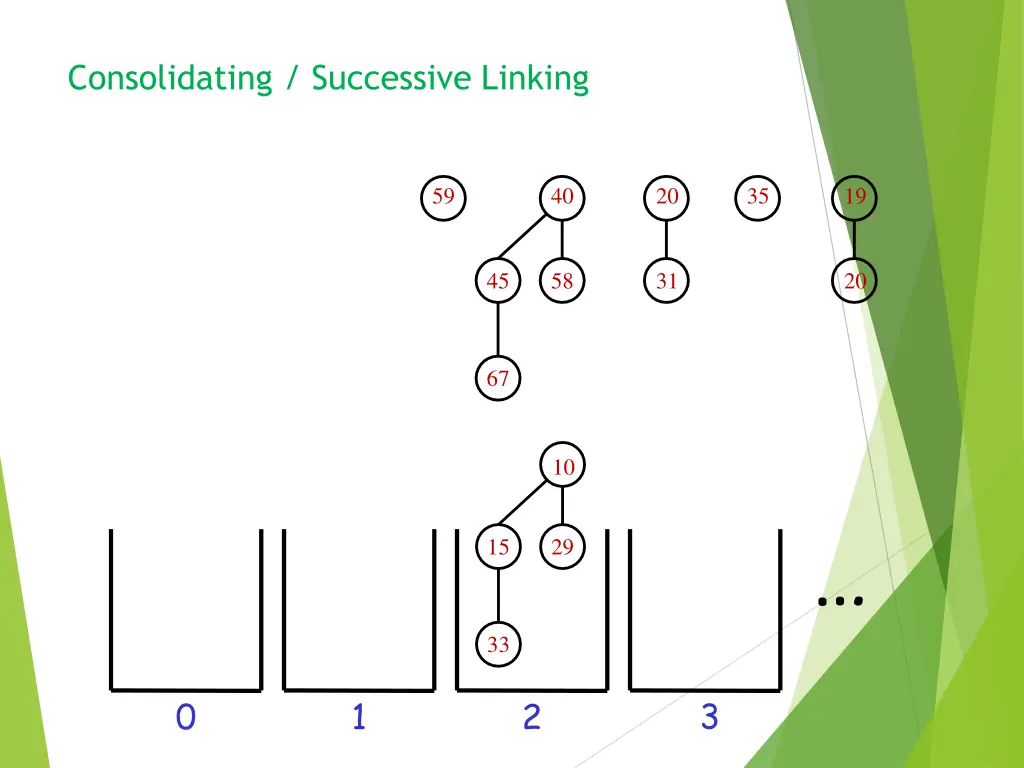
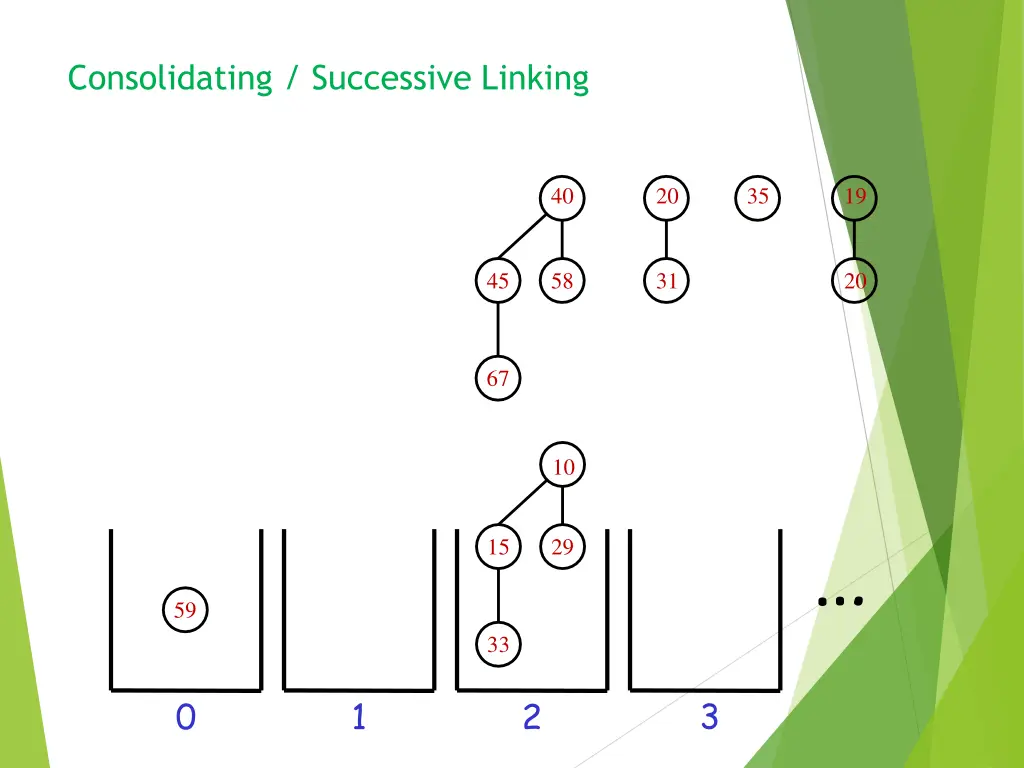
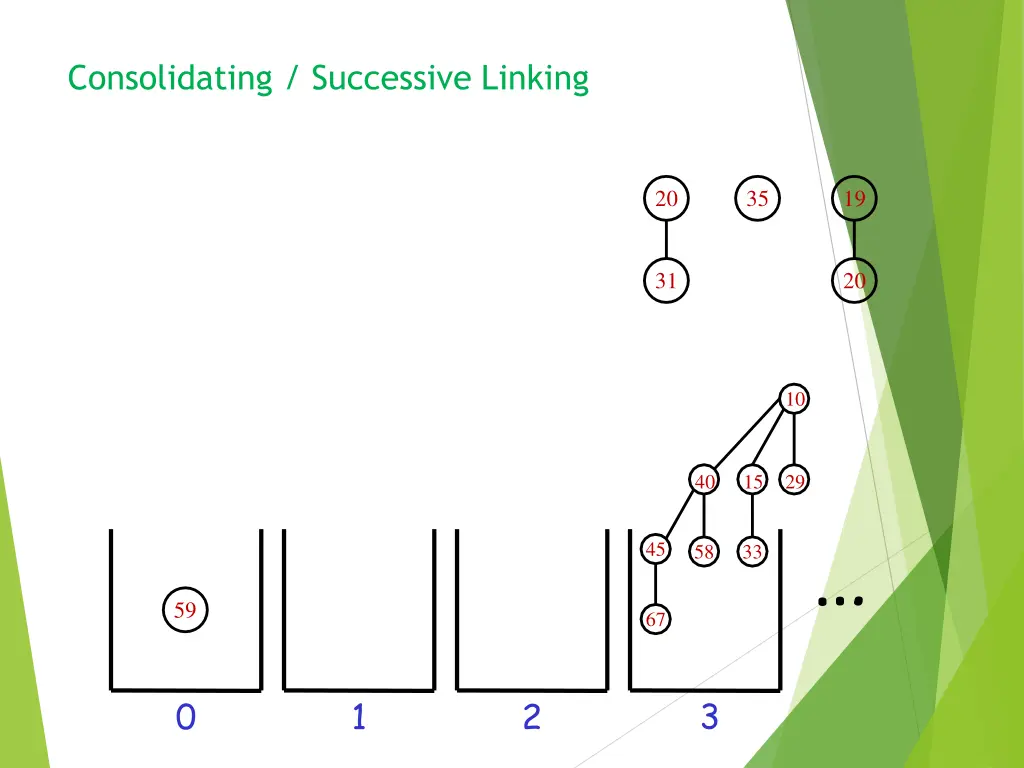
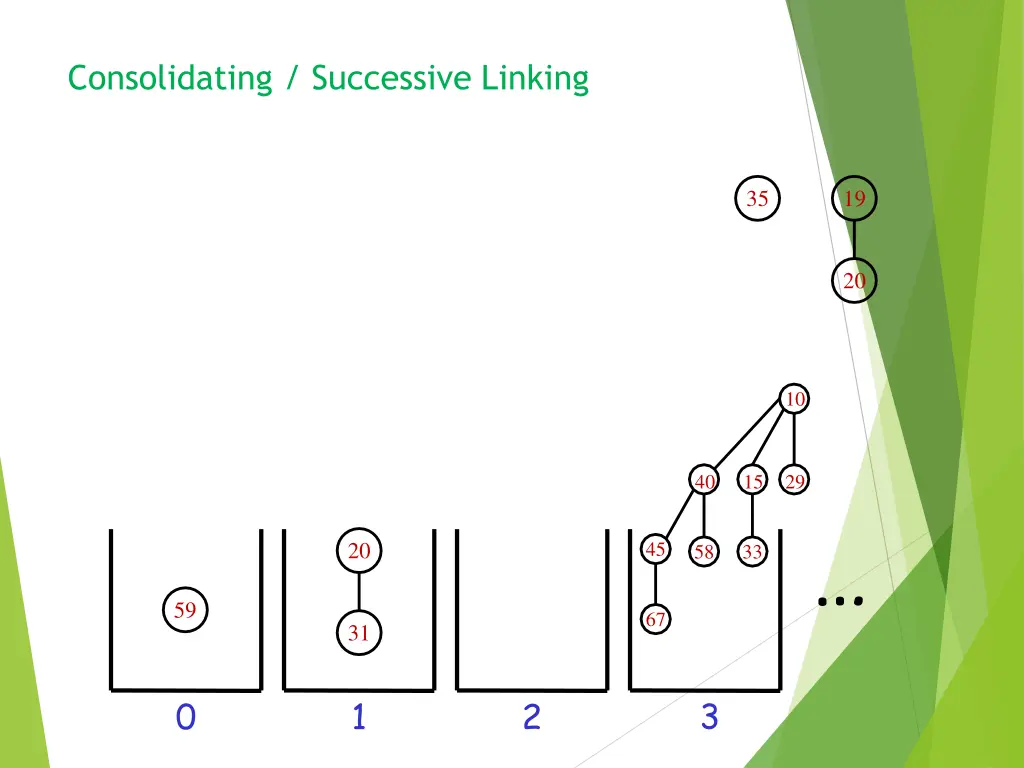
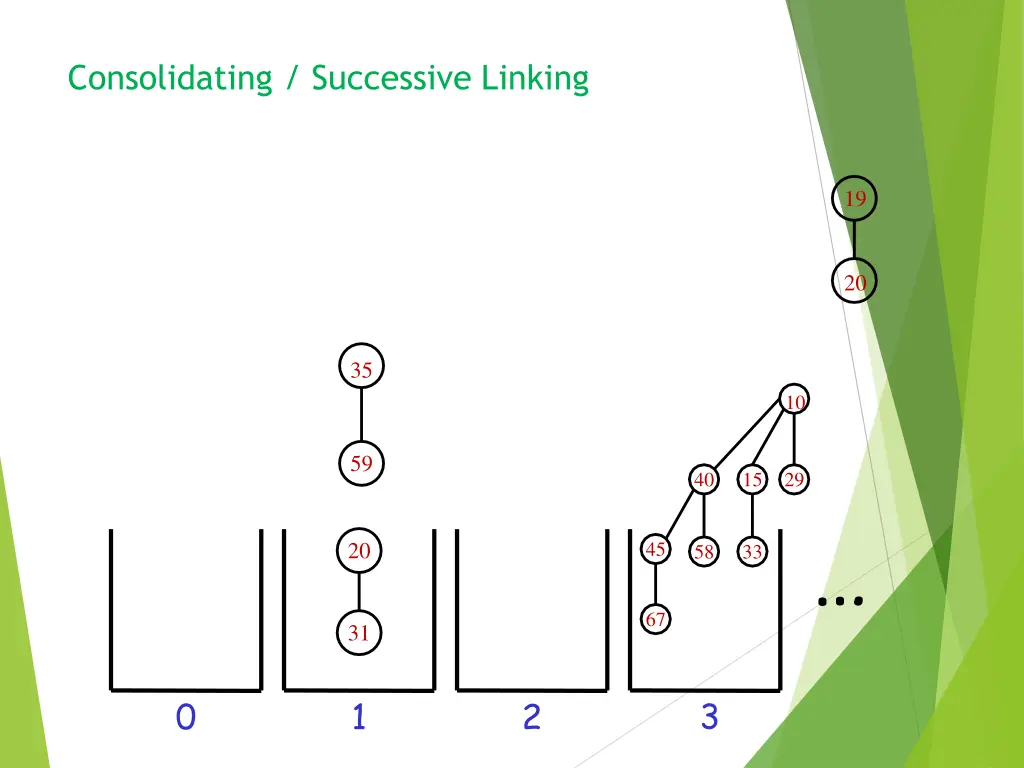
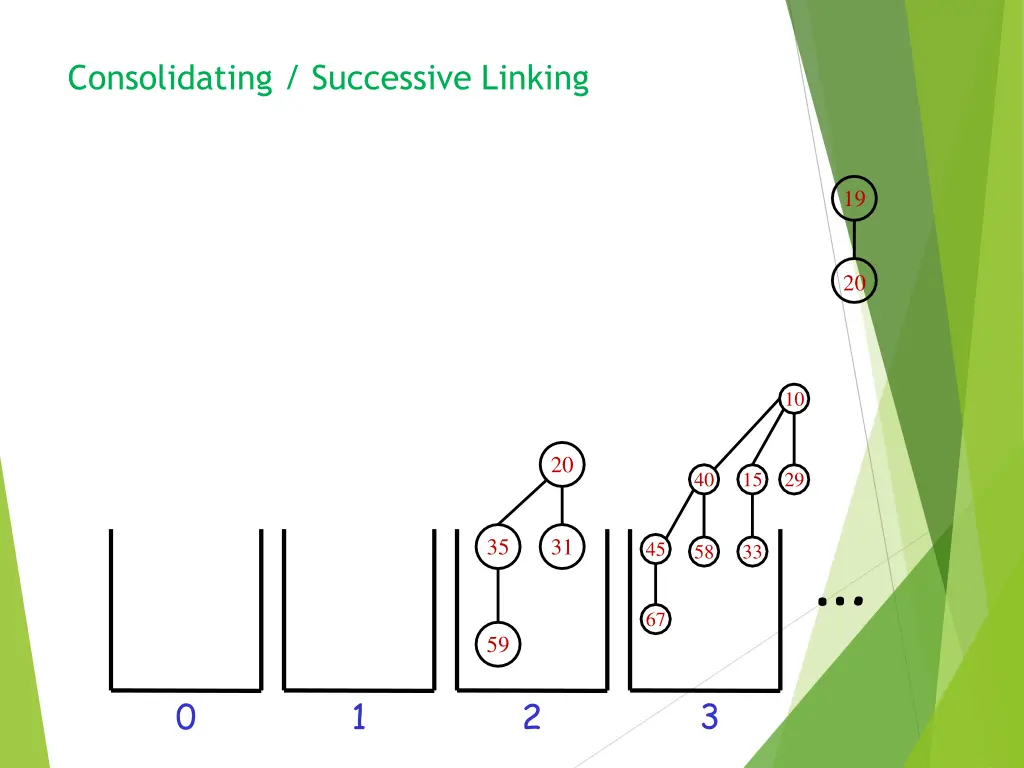
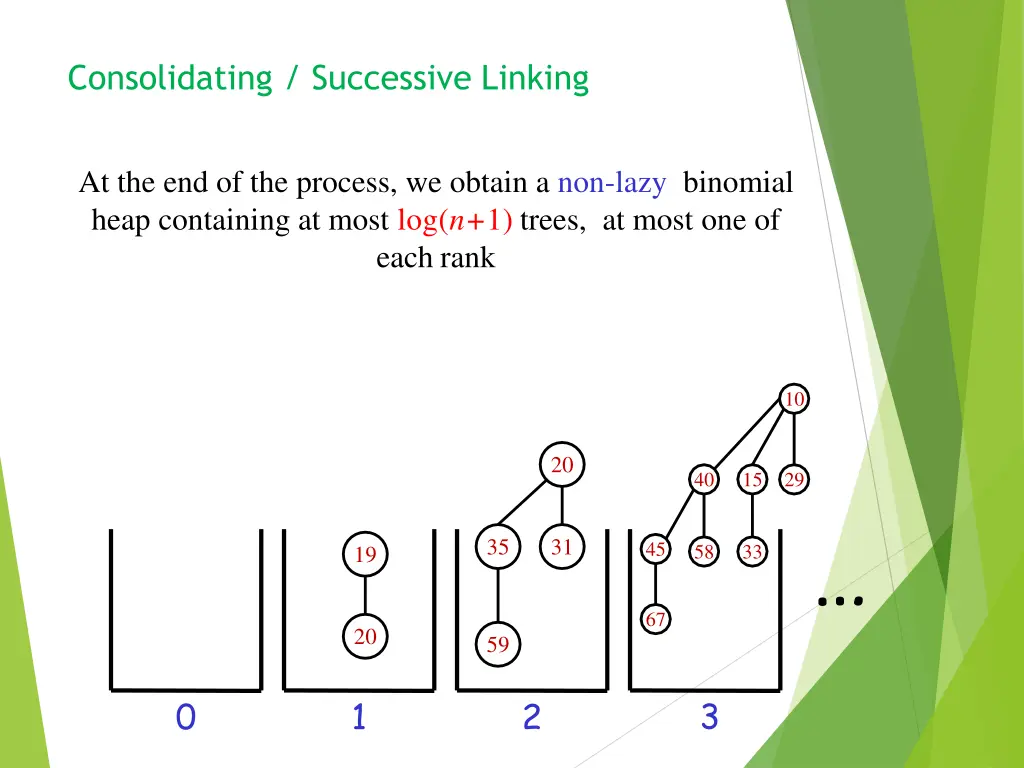
Consolidating / Successive Linking At the end of the process, we obtain a non-lazy binomial heap containing at most log(n+1) trees, at most one of each rank 10 20 40 15 29 35 31 45 58 33 19 67 20 59 3 0 1 2
Amortized Thinking Union violates binomial heaps structural property Let the Extract-Min convert the lazy version back to a clean binomial heap Extract-Min can cost ( n ) in worst-case However, it is O( log n ) amortized time ! Union : increase potential Extract-Min : decrease potential
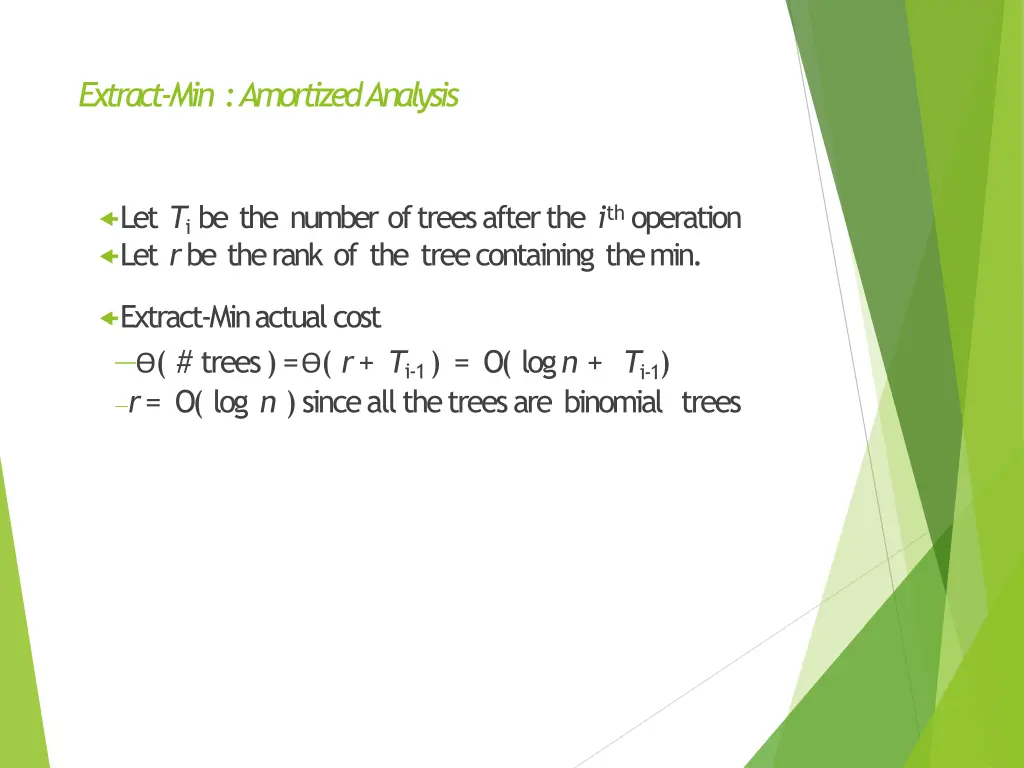
Extract-Min : Amortized Analysis Let Ti be the number of trees after the ith operation Let r be the rank of the tree containing the min. Extract-Min actual cost ( # trees ) = ( r + Ti-1 ) = O( log n + Ti-1) r = O( log n ) since all the trees are binomial trees
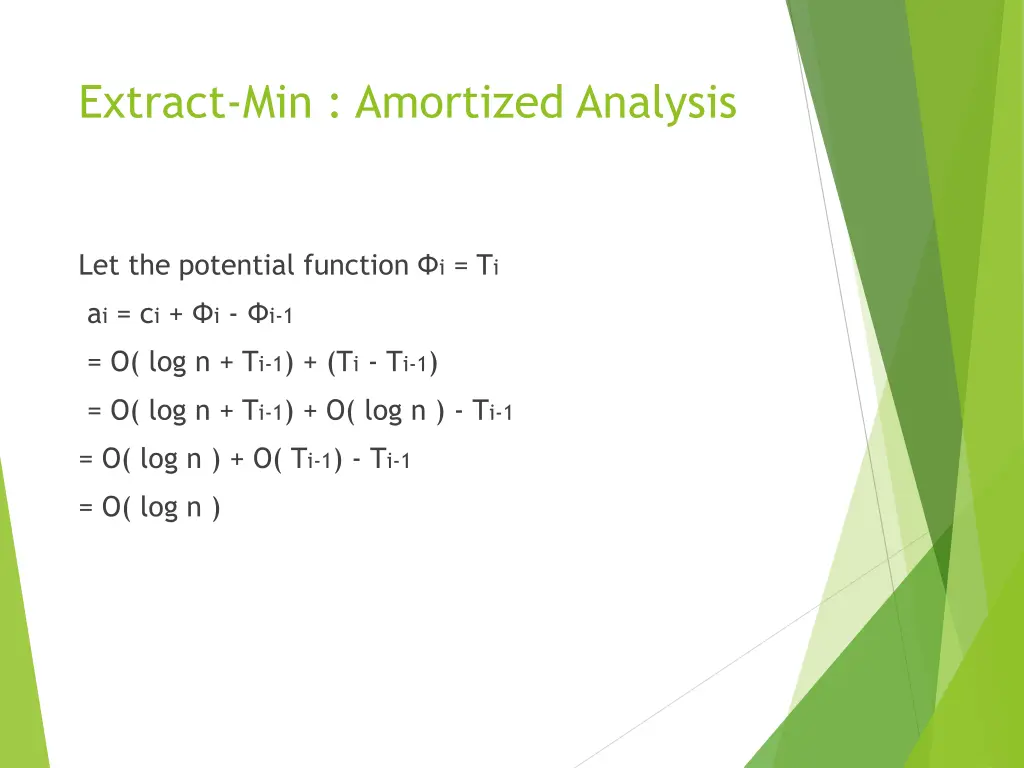
Extract-Min : Amortized Analysis Let the potential function i = Ti ai = ci + i - i-1 = O( log n + Ti-1) + (Ti - Ti-1) = O( log n + Ti-1) + O( log n ) - Ti-1 = O( log n ) + O( Ti-1) - Ti-1 = O( log n )